Monday, July 12, 2010

When Labrador Retrievers Become Destructive

The difference between a good Labrador Retriever owner and a disastrous one depends on whether or not that person leads an active lifestyle. To put it in simple terms, labs were bred to be extremely active when in the company of hunters, from dawn to dusk. They used to run, swim, and retrieve foul for up to 16 hours each day, or more.

Labs have extremely high energy levels and just because your Labrador Retriever does not go out hunting, it does not mean that this dog is missing its inner expression to release the same amount of energy. This is great news for active people who like to swim, jog, and play fetch games as often as possible.

The term "disastrous dog owner" would best describe a person who is raising a Lab but absolutely hates going outside and being active. There are many people out there who love nothing more than to sit around the house all day watching television while they expect their Lab dogs to lay quietly alongside their feet with no need at all to run and play.

These types of people tend to complain that their pets are "overactive" and causing too much trouble around the house. However, the truth is that the dogs are perfectly healthy and literally wired and itching to move around. It is the way they were genetically programmed. It is what they were bred to do. Therefore, the problem lies within the owner, not the Lab.

Think Long & Hard Before Buying A Lab Puppy

Most people who run out and buy a puppy, especially one as active as a Labrador Retriever, have a tendency to overestimate the amount of play-time they can invest in their dog. Eventually, the excitement and joy of playing with a new puppy subsides and when the dog owner gets bored, these little balls of energy are left to entertain themselves.

Adult Labrador dogs need a minimum of one hour each and every day, both in the morning and again at night, to participate in strenuous, interactive physical activities. This does not mean simply letting your dog out in the yard by itself while you cook dinner. This will not suffice as "playtime". Labs need a partner to run and fetch with. Left to themselves for physical activity will prove unsuccessful as Labs tend not to exercise by themselves in a constructive manner.

When Labs Become Destructive

You can't just open up the door and tell your Lab to go play. While some dogs are independent enough to run around outside by themselves, Labrador Retrievers need someone to play with and if you are not around then they may become destructive. Behaviors such as non-stop barking, chewing, and digging up the yard will become commonplace.

Should your Lab start to demonstrate these types of negative activities, the last thing you want to do is become frustrated and deem your pet aggressive. The truth is that he is just doing what you wanted him to do: entertain himself.

Unless you are there to direct your Lab and be the "leader" while taking fun trips outside in the form of a hike, a jog, or retrieving games in the water, you must take responsibility for his destructive behavior and know that it is your fault and your responsibility to take charge of your Lab's physical needs.

Tristan Andrews is a freelance author who writes about labrador retrievers and dog breed descriptions.


Technorati Tags:

Continue Reading...

Thursday, July 08, 2010

Recall Alert: United Pet Group Voluntarily Expands Recall of Nutritional Supplements For Dogs

"United Pet Group Voluntarily Expands Recall of Nutritional Supplements For Dogs to Include Additional Tablet and Powdered-Form Products for Dogs and Cats Because of Possible Salmonella Health Risk"

United Pet Group, Cincinnati, Ohio is voluntarily expanding its recent recall of its Pro-Pet Adult Daily Vitamin Supplement tablets for Dogs to include additional pet nutritional supplement products for dogs and cats due to possible Salmonella contamination.

The recalled products are sold nationally at various retailers. The products include various United Pet Group Pro-Pet and Excel branded products for dogs and cats, and certain other private label brands of the same products. All of the affected products are in tablet and powdered form. These products are being removed from retail stores and consumers should immediately stop feeding these supplements to their pets. The affected products are those with expiration dates that include and are between "01/2013" and "06/2013." Products with expiration dates earlier than 01/2013 or later than 06/2013 are not included in this recall. The expiration date can be found imprinted vertically on the right side of the product label.

Laboratory testing has revealed that some lots of some of these products may be contaminated with Salmonella. The company is recalling the additional products out of an abundance of caution.

Pets with Salmonella infections may be lethargic and have diarrhea or bloody diarrhea, fever, and vomiting. Some pets will have only decreased appetite, fever and abdominal pain. Infected but otherwise healthy pets can be carriers and infect other animals or humans. If your pet has consumed the recalled product and has these symptoms, please contact your veterinarian.

People who handle these products can become infected with Salmonella, especially if they have not thoroughly washed their hands after having contact with them or any surfaces exposed to these products. Healthy people infected with Salmonella should monitor themselves for some or all of the following symptoms: nausea, vomiting, diarrhea or bloody diarrhea, abdominal cramping and fever. Rarely, Salmonella can result in more serious ailments, including arterial infections, endocarditis, arthritis, muscle pain, eye irritation, and urinary tract symptoms. Consumers exhibiting these signs after having contact with the product should contact their healthcare providers.

To see the TABLE OF RECALLED PRODUCTS and read more about this expanded recall visit:

United Pet Group Voluntarily Expands Recall of Nutritional Supplements For Dogs

Technorati Tags:

Continue Reading...

Monday, July 05, 2010

Puppy Toilet Training Top Tips

After breeding Labrador Retrievers for close to fifteen years, I have managed to learn a few golden tips on how to overcome some of the not-so-pleasant aspects of owning that new puppy.

So many times I have new owners call me in absolute despair wanting to know how on earth they can get their newest family member to pee or poop ANYWHERE except on the floor of their home. For me, it is a devastating statistic that the number one reason puppies find themselves in shelters is due to house training issues. This is such a simple obstacle to overcome, so long as you know how. So, how do we keep you and your pup from any more accidents that may be starting to stretch your friendship?

House training puppies can be a monumental task if the owner is naive of what specifically is required to have their pup behaving in an acceptable way. Think of it for a minute from the pups perspective... They have just arrived from a litter where their mother has fed, cleaned and disciplined them. Life was pretty easy there, they could mess about with their siblings and pee or poop wherever they liked AND (within the first two weeks of being born) mother would clean the mess up! Your pups mother would also lick and groom the pup clean of everything that stuck to their small body. Then, you came along. You and your pup have arrived back home... Minus the other litter mates and mother. Suddenly, the environment has changed, the social group has changed and the rules are SO unlike to what your pup was used to. Your life has also altered now. You have a little body that needs guidance and boundaries for it to understand what is needed in order to live harmoniously inside your home.

The only truly winning way to teach your pup how to be house trained is (drum-roll please...) for YOU to be trained! Nope, I don't mean that we have to train you to go potty and I'm sure you are house trained by now... However, if you feel you need revision on your own house breaking needs feel free to apply it to yourself :) Pups and dogs in general are creatures of habit.. A little like you and me. They flourish on regularity and thrive with repetitive actions. If you wanted to teach your dog the instruction to sit, you would use that instruction every time you requested it of him. You wouldn't say Plop yourself down or Take a load off along with a myriad of other phrases if all you wanted was for him to simply sit. Using that one term over and over will allow your dog to learn faster and with more success. The same is true for toilet training your pup or dog. If your pup learns that you are clear, consistent and easy to understand this will pave the way for everything your pup needs to know. If, however, he finds that you are frightening, angry and inconsistent you may look forward to a life with a dog that has no clear direction or boundaries on behaviour, and certainly no success at house training him or her.

Knowing the right commands and having the correct environment for your pup to go potty is paramount to your pup or dog learning for life. If you are able to learn some proper techniques to use, pick up on the signals your pup gives you and most of all... BE CONSISTENT, your pup will most certainly thrive under your care. Remember, every mistake teaches your puppy the wrong habit. Knowing what tools you must have for successful training will have your battle already half won. I constantly refer my new puppy owners to my website below for a fast and inexpensive sure fire way to combat the potty accidents, and to achieve a rewarding and satisfying relationship with your pup up for life. I wish you years of enjoyment and puppy potty training success!

To learn more about Potty Training for Dogs - GUARANTEED, check out House Training Now

Sarah has been breeding and training Labrador Retrievers for 14 years. She refers all her new puppy owners to the most economical guide available on the market. It is concise and accurate and extremely affordable. Available to visitors from this article for $9. Please visit NoNonsense Potty Training. We wish you many happy years with your dog. Sarah Gladman Article 2010© All Rights Reserved.


Technorati Tags:

Continue Reading...

Wednesday, June 30, 2010

Kong Wobbler Review and Giveaway

Recently, I was contacted by a public relations agency representing the Kong company, to do a review of their new Kong Wobbler. Without blinking an eye, I said YES, as I love the Kong products and I am always recommending them here on All About Labradors.

When my Kong Wobbler arrived I was very excited to have my two Labrador Retriever girls give it a try, as Kong products have always been a success with my Labbies.

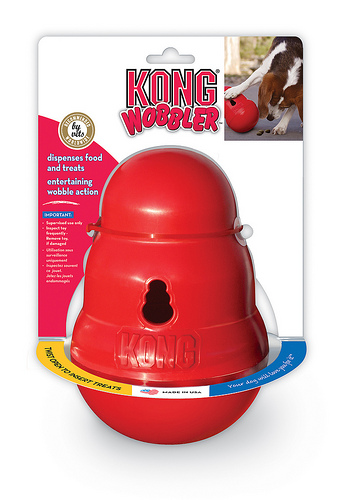
Kong Wobbler Package


As soon as it got her, I loaded it up with some Kong Stuff'N IQ Treats and set out to give it a try. I loved the ease of filling the Kong Wobbler, as the top screws off so you can fill it up.

Kong Wobbler Open


With its bee hive shape and a bottom that is weighted with sand, the KONG Wobbler wobbles but it won't fall down. On the ground it went, with my Labrador Retriever girls, Dakota and Meeko moving in closer to take a look.

Dakota, my take charge Labrador Retriever, started the investigation of the Wobbler and I enjoyed the look of puzzlement on her face, as she sniffed around trying to find the treats. Not to mention the look on Meeko's face as she paced back and forth watching Dakota!

As both Labrador girls got into the act, double-teaming the Wobbler, I watched as they barked and pushed with their noses, licking at the hole, trying to get the treats out. FINALLY, a swat of Dakota's paw sent the Kong Wobbler into a spin and roll, with a treat popping though the dispensing hole. From there it was just a matter of time before the dispenser was empty, even though Dakota did most of the work.

My Labrador Retrievers loved playing with the Kong Wobbler grabbing it in their mouths, tossing it around and receiving their treats.

I have been very pleased with the durability of the Wobbler, which is made with a heavy duty plastic and the easy of cleaning the product. After your Labrador Retrievers are done pouncing and drooling all over it, you can throw it in the sink or dishwasher for a good cleaning.

Another great product made by Kong and another product that All About Labradors will be happy to recommend.


Kong Wobbler Giveaway


One winner will receive a Kong Wobbler!

MAIN ENTRY:

Visit the Kong website and let me know another Kong product that you would like to try. Post your answer by leaving a "Comment" on this post. This is your first and main entry, it's a must in order to include any other bonus entries!

Extra Entries:

To receive these extra entries, you MUST do the MAIN entry. Please leave a comment for each additional entry you complete (current followers and subscribers count).

One Extra Entry if you subscribe to All About Labradors via E-mail.

One Extra Entry if you subscribe to All About Labradors via Feed Reader.

One Extra Entry if you follow with Google Friend Connect (lower right sidebar of All About Labradors).

One Extra Entry if you add All About Labradors to your Blogroll.

Five Extra Entries if you blog about this giveaway with a link back to this post.

Unlimited Extra Entries

To receive these unlimited extra entries, you MUST do the MAIN entry.

Tweet about the contest (be sure to leave the tweet link).

Leave a comment on another post besides this one ( leave link to comment ).

This giveaway is open to residents of the United States only, 18 or older and will end at 11:59 PM EST on Jul 5, 2010. The winner will be selected at random and the entries verified. The winner will then have 48 hours to claim their giveaway prize. If the winner does not claim their prize within their 48 hour period, a new winner will be chosen.

You must leave an e-mail address (or have it available in a profile) so that I can contact you if you are the winner. Be advised, comments are moderated.

Disclaimer: I would like to thank Fucini Productions on behalf of Kong for the opportunity to review this product. The opinions within this post are of my own and I was not influenced in any way. I was not compensated in any manner, other than the product to review. My reviews may not always positive, but they are my personal and honest opinions. Please conduct your own research before purchasing products.


UPDATE:

The winner of the Kong Wobbler Review and Giveaway is Katia. Thanks to all for entering our giveaway!

Technorati Tags:

Continue Reading...

Monday, June 28, 2010

My yellow Labrador Retriever has Allergies

From: Joyce (USA)

Subject: My yellow Labrador Retriever has Allergies

Labrador Retriever Name: Jagger

Reader's E-mail - Joyce Writes:

Jagger is a Champion sired yellow Labrador Retriever, his sire is the late Champion Ghoststone's Louis Downtown, a very popular and great dog. He has allergies just like Jamie's Allie. His diet consists of Raw Venison and sweet potato. Balance It are his vitamins that is put into his food. It seems that the allergies get worse in the Spring and Summer.

He licks and intensely bites the inside of his legs and his lower belly. I have been bathing him with Malaseb shampoo, leaving it on for 10 minutes and rinsing very well. It started when he was about 6 months, little bumps on his back, then ear infections, then biting his paws, this year is the first time he has these intense itches.

I am going to try the vinegar in his food, We have been putting 2 tablespoons of vinegar into spray bottle with water and tried that, so far no luck, it may be just a touch better but not a lot. It is most frustrating to watch our beloved pet suffer with this. He crawls along the grass to scratch is belly, the inside of his legs are red. We just don't know what to do anymore. Please help. He's the best dog in the world, he's been bringing us our newspaper every morning since he was 10 weeks old.

He's an absolute joy to live with and we need some help. He's on clariten twice a day. I am beginning to think it is something in the earth that is causing this... when it is cold weather its not like this. If you have any more suggestions, please write back.

Best regards,
Joyce

All About Labradors Answer:

The information given here is to help you learn more about your Labrador Retriever and not to replace your veterinarian's advice. Disclaimer.

As far as Jagger's problem goes it definitely sounds like a seasonal allergy. Atopy or atopic dermatitis is an allergic skin disease of dogs. In the allergic state, the dog’s immune system ‘overreacts’ to foreign substances (allergens) to which it is exposed. Most allergies are the inhalant type, also known as atopy. It results in itchiness, either localized (in one or several areas) or generalized (all over the dog). Common allergens that can cause atopy include tree pollens, grass and weed pollens, moulds, mildew, and the house dust mite.

Treatment of allergies:

Avoidance - in order to have any benefit with avoidance therapy, the offending agents must be identified through intradermal skin testing from your veterinarian. If pollen was an issue with Jagger (witch very well be) you could make sure you keep your grass cut short (keep him indoors when the lawn is mowed) , rinse Jagger's feet off after he has been outside and keep him indoors during periods of high pollen counts.

Topical therapy (which you are already doing) - using of shampoos, rinses and topical anti-itch solutions. Bathing with a hypoallergenic shampoo, colloidal oatmeal shampoo or hydrocortisone shampoo. Topical solutions containing hydrocortisone may be of help to Jagger, just make sure to watch him after applying as many Labrador Retrievers tend to lick off these preparations.

I would also make sure to wash off Jagger's feet and brush him when he comes in from the outside as this will remove any allergens.

Omega-3 fatty acids also might be of some help to Jagger. Research has shown that omega-3 fatty acids are beneficial in the management of allergies in dogs.

I've added a link for a video that should also be of help to you. Atopy in Dogs, Environmental Allergies:


I would recommend a trip to your veterinarian (if you haven't already) as they have many options to manage atopic dermatitis. Your veterinarian can perform an allergen test to determine what allergens might be troubling Jagger and give you allergy medication which can help ease Jagger's symptoms during the seasonal allergy period.

I hope this is of some to you. Please keep me informed of Jagger's condition.

Take care of yourself and Jagger,

Fay

Technorati Tags:

Continue Reading...

Sunday, June 27, 2010

Recall Alert: United Pet Group Voluntarily Recalls Pro-Pet Adult Daily Vitamin Supplement for Dogs Because of Possible Salmonella Health Risk

RECALL ALERT:

United Pet Group, Cincinnati, Ohio is voluntarily recalling all unexpired lots of its PRO-PET ADULT DAILY VITAMIN Supplement tablets for Dogs due to possible Salmonella contamination. The Food and Drug Administration is aware of this recall.

The product was sold nationally at various retailers. The product comes in 100-count white plastic bottles with a light blue label, and UPC code 26851-01800. These products are being removed from retail stores and consumers should immediately stop feeding these supplements to their pets. The affected products are those with expiration dates on or before "06/13". The expiration date can be found imprinted vertically on the right side of the product label.

Laboratory testing has revealed that one Lot of this vitamin product was contaminated with Salmonella. The company is recalling all unexpired Lots of the product out of an abundance of caution.

Pets with Salmonella infections may be lethargic and have diarrhea or bloody diarrhea, fever, and vomiting. Some pets will have only decreased appetite, fever and abdominal pain. Infected but otherwise healthy pets can be carriers and infect other animals or humans. If your pet has consumed the recalled product and has these symptoms, please contact your veterinarian.

People who handle dry pet food and/or treats can become infected with Salmonella, especially if they have not thoroughly washed their hands after having contact with the chews or any surfaces exposed to these products. Healthy people infected with Salmonella should monitor themselves for some or all of the following symptoms: nausea, vomiting, diarrhea or bloody diarrhea, abdominal cramping and fever. Rarely, Salmonella can result in more serious ailments, including arterial infections, endocarditis, arthritis, muscle pain, eye irritation, and urinary tract symptoms. Consumers exhibiting these signs after having contact with this product should contact their healthcare providers.

Consumers who have purchased the product are urged to contact United Pet Group or the place of purchase for further direction. Consumers may contact United Pet Group at 1-800-645-5154 ext. 3, Monday through Friday, from 8:30 am to 5:00 pm EST.

http://www.fda.gov/Safety/Recalls/ucm216903.htm

Technorati Tags:

Continue Reading...

Thursday, June 24, 2010

Labrador Eats Beehive, Wins Unusual Insurance Claim Award

Brea, California

A Labrador Retriever has won the title of "Most Unusual Claim" for April after eating the remains of an exterminated bee-hive.

The Coe family of Santee, California, thought they had seen the last of the bees buzzing around their home after exterminators sprayed a hive in their yard. That is until later that night when Sandra noticed the family's 1-year-old Labrador retriever wasn't acting like herself. Unbeknownst to the Coes, Ellie had discovered and eaten the beehive after the exterminators had left. Frightened by the volume of dead bees Ellie was vomiting, Sandra decided the dog needed to go to the veterinary hospital.

The emergency veterinarian on duty examined Ellie and determined she had most likely only ingested dead bees and hadn't been stung. Additionally, Poison Control indicated the pesticide did not pose a significant risk of toxicity. After a dose of anti-nausea medication and a few hours of observation, Ellie was on her way back home. And for the next week, the Coes administered over-the-counter antacid tablets and put Ellie on a diet of plain white rice and chicken. "She acted just fine that week, really, but every time she went to the bathroom, she pooped bees. Thousands of bees. I don't know where they all came from - the hive wasn't that large," joked Robert Coe.

Ellie's insurance claim was one of 80,000 insurance claims received by the nation's largest pet insurer, Veterinary Pet Insurance Co. (VPI), in April. The claim was considered along with other uncommon medical claims submitted in April and selected by VPI as the most unusual of the bunch. As the most unusual claim submitted in April, the claim will be placed in the running for the 2010 VPI Hambone Award (named in honor of a VPI-insured dog that got stuck in a refrigerator and ate an entire Thanksgiving ham while waiting for someone to find him).

Other honorable mentions in April included two dogs that ate light bulbs, a bulldog that ran into and dented a car, a dachshund that swallowed a hearing aid, a bull mastiff that was attacked by a woodchuck, and a skateboarding golden retriever that skinned its front paws. All pets considered for the award made full recoveries and received insurance reimbursements for eligible expenses.

View the latest World Pet News every week at PetPeoplesPlace.com.

Original Source: http://www.petpeoplesplace.com/resources/news/dogs/labrador-eats-beehive-wins-unusual-insurance-claim.htm


Technorati Tags:

Continue Reading...

Monday, June 21, 2010

The Difference Between English and American Labrador Retrievers

The Labrador Retriever is one of the most popular pet dogs in North America and in the UK. But not all labs are the same - there are different body types, different personalities, different colors and more. One of the most common divisions in kinds of labs is by breeding origin. These are generally referred to as English Lab Retrievers and American Lab Retrievers.

While all labs are originally from North America, via their origins in the St. John's Dog, they've been bred in the UK for long enough that there are now some differences. English Labs have a solid coat, just like American dogs, and come in the same range of colors (chocolate, yellow, black, and sometimes dilute chocolate and black, or "silver"). But they're not really shaped the same, and they have slight differences in temperament.

English Labrador Retrievers are more solidly built than their American cousins, with wide heads and muzzles, blocky bodies and a solid shape. They also have a more docile personality and are less excitable. These dogs have shorter bodies, too, and have been show and pet dogs longer. They're also called bench, conformation, or show labs.

American Lab Retrievers are taller and usually more lightly built than English Labrador Retrievers. They're often called field Labradors or working labs. For much of their history, these dogs have been hunting animals. They have narrower heads and longer noses, as well as a more lively personality. They're just as friendly and easy going as an English lab, though.

To make matters more confusing, both kinds of Labrador Retriever can be found all over the world. The term "English Labrador Retriever" just means that the dog's ancestors were from England. An American lab's ancestors came from North America. There's also an Australian line that's not common in the UK or US, but can be found in many places in Asia.

The AKC and other registry organizations don't really differentiate between English Labs and other body types. Instead, they judge all labs by the same standards. A Labrador has to meet certain personality qualifications, and has to look a certain way to be considered "on type." Dogs shouldn't be thin and willowy like a Doberman, for instance. Whether the animal's ancestors came from one place or another doesn't really matter to the judges.

So which kind of Lab Retriever will be best for you? It depends on what you want out of your dog. There are a few differences. An English Lab Retriever is generally more solidly built and more docile, while an American lab is more energetic and may be a better hunting animal. Both types are good family pets and eager to please. Just take the time to meet a few dogs, and see which ones you prefer.

Tim Williams is a Labrador retriever enthusiast. He owns and maintains Labrador Retriever Answers, a resource for all Labrador retriever lovers and where you can find more great information on English Labrador Retrievers and other essential lab advice.


Technorati Tags:

Continue Reading...

Monday, June 14, 2010

Learn Easy and Fun Strategies to Teach Your Retriever Puppy

Before beginning obedience training develop the desire to retrieve. To test if your pup has inherited natural retrieving tendencies toss a toy, ball, or a puppy-size canvas dummy a few feet in front of the pup. You are testing if he will go after it and bring it back to you. If he is not interested in retrieving or does not give up the object means you will need to spend time teaching this skill. Many dogs become just as eager and competent retrievers even though they may not start out with natural abilities.

The retrieving experience should be playful and fun for the pup. Take your dog to a field or park where you can throw a dummy for him to fetch, keeping him on a long lunge line. When throwing the dummy, enthusiastically tell him to fetch. As soon as he reaches the dummy and picks it up vigorously encourage him to return to you. The secret is to run away from your dog so that he has to chase you carrying the dummy. Do not get discouraged if your dog will not pick up the dummy. He can learn that skill when you teach him basic obedience. The training strategy is to teach your pup to come back to you when playing fetch even if it is without the dummy. Using a dog whistle for the return signal is recommended because the sound is more commanding than voice.

Before serious obedience training, it is important to allow your puppy time to adjust to the house rules, boundaries, and be introduced to the leash. Even though the brain of a pup is completely developed, the focus is scattered, and he will bounce from one activity to another. Your puppy will often drop off to sleep since physical growth takes so much of the energy.

The word no will be the most used word for the first few months. Remember, when reprimanding your dog you need to catch him in the act for him to understand the correction. Set up times when you actually let your dog do the misdeed so you can correct and teach him. Eventually just a firm no when he is tempted will be enough to stop any wrong moves.

The sit command is the second command I teach after teaching the dog to come back. If you teach your dog to sit every time he comes to you, it will stop problems of jumping on people. This can be taught in a soft manner as early as eleven weeks.

The first weeks and months is the time to instill a winning attitude in your dog. The result will be a puppy that wants to come back to you, who will listen to you, and who will be broken to the leash. Your retriever will be ready for formal training lessons at four months.

Jean Smith is a dog trainer specializing in training retrievers. She has condensed years of experience into two DVDs. Lessons http://www.teachmeplease.com from basic obedience through advanced. Jean has helped hundreds of people train their own dogs.


Technorati Tags:

Continue Reading...

Friday, June 11, 2010

Free Hollistic Blend Dog Food Sample

Hollistic Blend is offering a free sample of their dog food (for those of you with cats, they are also offering a cat food sample).

Information about Hollistic Blend:

We believe a pet's health, behaviour, temperament, longevity, ability to reproduce successfully and to recover from trauma depends greatly upon properly administered and sustained nutrition. Holistic nutrition considers the animal's total wellness- looking beyond basic dietary requirements, to achieve optimum equilibrium between body, mind & spirit.

We use high quality ingredients in our food formulas, supplements, alternative aids and treats to proactively build, maintain and repair functional systems. We only produce high quality products because we know how important it is to have your pets taken care of.

We're proud to say veterinarians, both conventional and holistic, recommend Holistic Blend® to their clients. Check out the nutritional values and ingredient lists on the site and we think you'll agree, when you compare them to other commercial products, we're confident you'll decide your pet deserves the quality and goodness of Holistic Blend®.


There are two canine formula samples you can choose from:

Lamb & Rice All Life Stages Canine Formula
Chicken, Rice & Vegetable All Life Stages Canine Formula

Head on over to the Holistic Blend website where you can request a Free Hollistic Blend Dog Food Sample and learn more about the nutritional values and ingredient of their foods.

Technorati Tags:

Continue Reading...

Thursday, June 10, 2010

Why Labrador Retrievers are Good for Kids

It’s important to look at the history, temperament, health, grooming requirements, and personality of a dog who is going to co-habitate with a family that includes young children. Not all breeds are kid-friendly. Dogs that are going into homes with kids should be able to take roughhousing by children, and be patient and gentle by nature. As proven time and time again, Labradors are the best dog for young children. Especial a newborn or a toddler, as Labs are known to have great patience and mother instinct. This article will discuss this best dog breed for your child.

First of, Labradors are gentle. They are the most sought-after dogs because their good reputation with small children and small animals is known around the world. Even when they play-fight, they would never harm their master or master's children. They are very low-aggression dogs that enjoy the company of their family.

Second, Labs are tolerant and patient. They are not quick to get annoyed or upset, and will often sense when there is tension in the room. They get along well with both adults and children and can handle the unpredictable nature of kids.

Third, Labs are also protective and will look after your small tikes. Their main goal in life is to please their human owners and protect them. You have seen movies where the Lab dies to protect his master. Labs are especially designed to be great companions for the old and the young.

Fourth, Labs are great for inside dogs. They are pretty low-maintenance in terms of shedding, grooming, and bathing which is why most people who have Labs keep them inside. They don't require a lot of training or hyper-active control, they just need love and care. Labs don't have as many health problems that other dog breeds do, so you won't have to worry about your dog carrying disease to your kids. Some Labs may experience hip-displaycia but this is due to old age.

Of course other factors to consider when getting a dog for your entire family is the size of a dog, however don't over look these important factors when choosing your pup.

Article provided by the Pet-Super-Store, where you can find a wonderful selection of dog beds and dog gates.


Technorati Tags:

Continue Reading...

Monday, June 07, 2010

Doggy Odor in Labrador Retrievers!

Why does a Labrador have doggy odor?

Like any other animal, dogs will walk, run, and play in areas that might result in their gathering dirt, disease, or odor. The Labrador retriever may begin to produce odor due to a number of factors, such as oily skin, dirt accumulation, ear or anal infections, and dental/plaque buildup. Not only can odor be offensive, it can be a sign of an unhealthy retriever. If a Labrador retriever is not monitored, and the sources of doggy odor are not removed, the Labrador retriever will develop chronic physical problems.

What to do About Doggy Odor?

When a Labrador retriever begins to emit doggy odor, closely inspect the dog from head to tail. Check the retriever’s ears for debris, red skin, and odor. If an ear infection is present, it could be the result of the dog’s ears not being properly ventilated. Ear infections are common in dogs with ears that are floppy or folded over. If the dog’s ears are not properly ventilated, the inside becomes moist and warm, and infection can easily result.

Look in the dog’s mouth for plaque buildup on the teeth, and for discolored or missing teeth. In addition to the well-known “dog breath,” additional odor may be coming from the dog’s mouth as a result of food buildup and poor oral hygiene. Check the retriever’s feet; there may be a cut or infection on the dog’s foot pads. This type of injury should be immediately cleaned and bandaged. Run your fingers through the dog’s coat, and make sure you inspect all sides of the coat. There may be a concealed skin injury underneath the Labrador’s fur. Also, check for an oily or greasy texture appearing on the retriever’s coat. The coat might be producing dandruff or the skin may be flaky.

One of the most prominent areas for odor generation is the retriever’s backside. There could be anal infection, a buildup of feces on the dog’s coat, or the Labrador might be constipated or have diarrhea, both of which will produce significant odor.

As you are inspecting the retriever’s body, take detailed notes on what you see, smell, feel, and hear. These notes will become valuable when you take the dog to a veterinarian. Also, it will document signs or symptoms that you might forget to tell the veterinarian.

If your dog is exhibiting odor and is found to have an infection or illness, take proactive measures to protect your Labrador retriever. Take action and make a dog-care schedule for your Labrador.

Dogs need to be kept clean, but caution must be taken not to give the Labrador too many baths. If the dog is bathed every week, the retriever’s coat is deprived of natural oils. As a result, over- bathing a Labrador can increase odor. A dog should be bathed once a month.

Part of maintaining a clean home includes washing animal bedding, play toys, and the dog’s collar. After washing the Labrador’s bedding, make sure that the bedding is completely dry before allowing the dog to sleep on it. If the bedding has been removed from the dryer or brought in from a clothes line, vacuum the bedding with a small hand vacuum; this will remove any debris that was left by the dryer.

A Labrador retriever should be monitored when it goes outside, especially if your home is in a rural and/or wooded area. The dog might be picking up odors from discarded garbage or a dead animal carcass. Odors from rotting food or meat are extremely pungent. Also, they can induce vomiting if eaten. If your Labrador is allowed to go into wooded areas or alleys, follow the dog to see if he is eating carrion or miscellaneous garbage.

When dogs have odor emitting from their teeth or gums, it can be treated with a professional brushing which can include removing plaque from the dog’s mouth. Ask the vet about dog treats that are designed to help keep teeth and gums clean. Make teeth inspection a regular part of your dog’s cleaning schedule.

When your retriever has been playing in dirt or mud, keep two or three old towels ready to clean the dog’s coat. One towel can be put in water and used to clean the dog’s coat, and the other towel can remain dry and used to dry the dog’s coat. Dogs enjoy physical attention and respond well to having their coats cleaned.

Brushing the retriever on a daily basis helps to reduce smell, remove excess fur, and stimulate new hair growth.

Finally, ask your veterinarian about changing the Labrador’s diet. Dog food that contains solid meat promotes healthy skin, teeth, gums, and stools. High-quality food is available through a veterinarian or at large-scale pet shops. When shopping at a pet store, ask the store staff for recommendations.

Animal odors can result from a number of different sources. To make sure that your Labrador retriever is free of odor, it is necessary to perform regular visual checkups. The doggy odor will be removed when the dog’s body is inspected thoroughly, cleaned regularly, and taken to the veterinarian for regular checkups.

The author, Nancy Richards, is a dog lover and dog trainer for the last 8 years. Learn All about Labrador Retriever Behavior, Adoption, Training, Diet and Health Care from her website TrainPetDog.com


Technorati Tags:

Continue Reading...

Thursday, June 03, 2010

Free Sample of Purina ONE SmartBlend Dog Food

A Free sample of Purina ONE Dog Food from Walmart. They are also offer a free sample of their Purina ONE cat food but you only get to choose one.

Information about Purina ONE SmartBlend Dog Food:

Purina ONE SmartBlend formulas start with real lamb, salmon, chicken or beef and add select ingredients delivering nutrition shown to help make a healthy difference in your pet. The result is a unique blend of tender morsels and crunchy bites for a taste dogs love.


The FREE sample of Purina ONE Dog Food is available while supplies last. Limit (1) sample per household. Samples are only available to consumers in the United States.

Technorati Tags:

Continue Reading...

Wednesday, June 02, 2010

Free Three Dog Bakery All Natural Dog Cookies Sample

Walmart is offering a free sample of Three Dog Bakery All Natural Dog Cookies.

Information from the Three Dog Bakery website -
In putting together the best, all-natural ingredients we admit, we had a little help. Our team consulted with vets, breeders, pet shop owners, pet lovers and even held our own in-house focus groups (the girls loved every minute of it). The results were conclusive. The ingredients make the difference – using healthier ingredients means healthier, more energetic dogs.

We do want to warn you, there may come a time when you get a little jealous of your dog. Who wouldn’t? Just a whiff of our rich and nutty peanut butter and you might find yourself drooling too. The thought of our sweet and delectable carob chip cookies has been known to set our legs kicking with delight. And that’s just scratching the surface of the ingredients we offer in our all-natural, oven-baked goodies.


To make your request for a FREE sample of Three Dog Bakery All Natural Dog Cookies, just click the listed link and you will be taken to the Walmart website for your mailing information.

Sample are while supplies last. Limit (1) sample per household. Samples are only available to consumers in the United States.

Technorati Tags:

Continue Reading...

Monday, May 31, 2010

How to Housebreak Your Dog without Losing Your Sanity

This is the second half of an outstanding two part article/series on housebreaking a dog of any age from the wonderful folks over at Mercola Healthy Pets. Follow the advice to help in your housebreaking trials. You can follow Dr Karen Becker in the video and/or the article as she discusses crate training, positive reinforcement, and fine-tuning for dogs with special needs. Feel free to add any advice you might have or agree with by leaving a comment.


As I mentioned in part 1, Four Proven Principles of Housebreaking a Dog of Any Age, of this two-part series, there are three keys to successful housebreaking, and they’re so important I want to repeat them here:

* Consistency
* Positive reinforcement
* Patience

As I also mentioned last week, the first principle of house training is to never leave your dog unoccupied – not even for a minute. For most of you, that is easier said than done. That’s why I recommend crate training.

I’m a big fan of crate training and recommend it to all my dog owner clients at my animal hospital – especially those who need to housebreak their pup.

Whether your pooch is a puppy or a senior, a new member of your pack or an old hand, providing him with his very own cozy space has a number of advantages for both of you. This goes double if your dog isn’t yet potty trained.

The Beauty of Crates

Why is a crate a good idea for you and your dog?

A crate allows you to work with your pup’s natural desire to be a den dweller. Dogs in the wild seek out small, dark, safe spots to inhabit.

If you bring a new puppy into your home and you don’t have a crate ready for her, she will try to locate a spot – under a table or chair or even behind the toilet in the bathroom – which answers her need for a secure, out-of-the-way “den” of her own.

If you were to leave her in her makeshift den, you’d soon notice she would not relieve herself there. That’s because dogs are programmed by nature not to soil their dens.

In the wild, nursing wolves and coyotes teach their pups to relieve themselves outside their dens. This keeps predators from investigating inside their little homes, and keeps messes outside the sleeping area.

And that is exactly why crates are so useful for un-housebroken dogs. A dog with her own made-to-order den will not want to soil it, so by purchasing a crate for her, you work in harmony with your pup’s natural instinct to keep her little space clean.

As long as your dog is getting consistent and frequent trips outside to relieve herself, nature will prompt her not to soil her den space in between potty trips.

You’re halfway to the housebreaking finish line if your dog is not soiling her crate, but instead is waiting to be taken outside. The bonus, of course, is that she’s also not making a mess on your floor.

Purchasing a Crate

Crate size is important. You want a space that is not too small, but not too big.

Your dog should be able to stand up, lie down and turn around in his crate. It should be large enough for him to move around in comfortably, but not so large that he can easily use one end as his bathroom and the other end for sleeping and snacking. A crate that large can actually slow down the housebreaking process.

If you’re unsure what size crate you need, talk to a store employee about the size of your dog and what you want to accomplish, and he or she should be able to help you pick the right size enclosure.

You can also talk to a breeder, veterinarian or other knowledgeable source about what size crate to buy.

If you’re crate training a puppy, especially a medium to large breed dog, keep in mind you’ll most likely need to graduate to a bigger crate as your pup matures.

Getting Your Dog Used to His Crate

The first rule of crate training: never force your dog into a crate.

Remember Meredith from part 1? She’s the 10 year-old, un-housebroken stray girl I rescued by the side of the road on my way to work recently.

We actually kennel trained Meredith because her home, for now, is Natural Pet (my clinic) and the clinic is outfitted with kennels, not crates. We started out by feeding Meredith in her kennel to associate a positive experience (food) with her new safe place.

You never want to introduce a crate, shove your confused pup into it, close the door and leave him. That’s how you wind up with a dog with a raging case of separation anxiety and/or a pathological aversion to enclosed or small spaces.

At my house, we never pull a dog out of his crate, either. The crate represents a safe zone for your dog, so you never want to make his safe zone feel unsafe to him by forcing him into it or out of it.

The second rule of crate training: it’s all good.

In other words, everything about the crate must be a good thing from your dog’s perspective. Treats go in the crate. So do chew toys, raw bones, and very special indulgences like maybe a Clever K-9 filled with almond butter or chicken strips.

The goal is to have your dog voluntarily enter his crate – and sooner rather than later.

What I do at home is drape a blanket over the back half of my dogs’ crates to create a quiet, dark (den-like) environment. My dogs use their crates as bedrooms – they go into them to sleep.

If your pup has had no bad experiences with a crate and you create a safe, dark little den for him inside, he might just go right in voluntarily as soon as you present his new space to him. If so, that’s excellent!

Even if your dog takes to his crate right away, you still want to stick with the “it’s all good” rule and put treats, toys and other goodies in there for encouragement.

Overcoming Hate for the Crate

If your dog is nervous about his new little space or has an actual aversion to a crate due to a bad past experience, you’ll have to take it a bit slower.

A dog that has experienced a crate as a form of punishment or has been locked up for inappropriately long periods must be gently and patiently reconditioned to view his crate as a good thing.

Obviously you want your pup in there comfortably -- with the door closed -- as soon as possible in order to successfully housebreak him. But until he gets the “it’s all good” message about his crate, you’ll need to be extra vigilant about getting him outside to potty at frequent, regular intervals.

Make sure to leave the door to the crate open for a nervous puppy or dog. Put food rewards around the outside of the crate and inside as well so your pup can get comfortable going in and out of his crate without worry about being trapped inside.

Move his food and water bowls closer to his crate to further associate good things with the crate.

In Meredith’s case, once she understood the door to her kennel remained open whether she was inside or not, she got comfortable going in and coming out on her own. Soon, she chose to go in, lie down and rest awhile before coming back out.

Because we fed her inside her kennel with the door standing open, she quickly developed the habit of running excitedly to her kennel as soon as she saw her meals being prepared.

Once you sense your dog is comfortable inside his crate at mealtime, try closing the door as soon as he starts to eat. Do it nonchalantly, without fanfare. Praise him in low tones and then get busy with something.

Chances are he’ll finish his meal and then realize the door is closed and he’s not free to leave his crate. Meantime, you’re going about your business as though nothing is different.

Your pup may look at you with an expectant or confused expression as if to say, “Um, hello? The door’s closed. I can’t get out.”

You don’t need to ignore him completely, but you should keep to your own business and stay very, very calm as though there’s nothing out of the ordinary going on. Your dog may whine or cry a bit, but he should pretty quickly decide to lie down.

I recommend when you first start closing the crate door that you close it only for short periods of time. You’ll also want to leave an interactive toy or treat inside the crate – to keep your pup pacified.

After a few minutes, when your dog has relaxed inside the crate and seems to be saying “Okay, I’ll just hang out in here awhile,” that’s your signal the crate has gone from a bad thing to a neutral experience for your dog. Open the door and allow him the freedom once again to come and go.

Once your dog is associating only good things with his crate and feels comfortable inside it, you can close the door for longer periods of time. Don’t try leaving your house for short periods until he’s completely comfortable with the crate while you’re home.

Establishing Verbal Cues

Back at Natural Pet, little Meredith, true to her den-dwelling canine nature, absolutely would not pee or poop in her kennel, so we expanded her territory by baby-gating her in my office. Since my office then represented a larger “den” of sorts, Meredith also refused to relieve herself in there.

When I arrive at the clinic in the morning, the first thing I do is put Meredith on a leash, grab some treats, and take her outside to relieve herself.

I bring her to a specific spot each time and I give her about five minutes to do her business. That’s usually enough time for her to sniff around and decide to go.

Now, if you take your un-housebroken dog to her spot and she just looks at you … and you look back at her … and she keeps looking at you as if she’s wondering why you’re standing there looking at her, it’s a good sign she’s not going to do her business this trip.

What you want to do in this case is bring her right back to her crate (or room) and close the door. You’ve got a pup with a full bladder and full intestines and you don’t want her loose in your house. That’s a set up for her to fail, and the goal of housebreaking is successes, not failures.

In a half hour or so, grab the treats, take her back outside to her spot and let her try again. You shouldn’t have to repeat this more than once before your pup really needs to go and will, but be prepared just in case to go back and forth from the crate to the potty spot a few times.

Don’t make the mistake of assuming if she doesn’t relieve herself when you take her out the first time that she doesn’t need to go. Sure she does – especially first thing in the morning. She should either be in her crate or outside in her potty spot until she has done her morning business.

In the beginning, Meredith really didn’t know what she was doing standing outside. She’d sniff the ground, check out the leaves blowing around, and eventually she’d just squat. She didn’t realize that’s exactly what I wanted her to do, so I had to reinforce – mark -- her behavior with a verbal command.

The minute Meredith started to urinate I’d say “go potty.” That’s how I marked the behavior I desired. The goal is to associate in your dog’s mind the verbal cue “go potty” with the act of relieving herself. “Go poo” is her command to defecate. You might try another phrase that pays like "do your business" or "get busy". Whatever works!

Eventually, you’ll be able to take your dog to a spot – ideally any spot of your choosing whether at home or elsewhere – and give the verbal cue you've chosen and as if by magic, she will!

Reinforcing Positive Behavior

It’s easy to get overly excited when your pup potties outside right where you want him to, but you want to make sure not to get so excited that you scare him while he’s in the act, causing him to stop doing the thing you’re praising him for. Make sure your “go potty” verbal command is said in a low, reassuring tone.

Within three seconds of your pup finishing his business, you must give him a treat and say “good job.” Give him a couple more treats and continue to praise him before you go back inside.

Don’t wait until you’re back indoors to give your dog his treat. What will happen in his little doggy brain is he’ll associate the food reward with coming back indoors rather than with relieving himself outside. You’ll soon feel like you’re being tricked to let your dog outside, only to see her beg to come back in to receive a reward.

That’s why it’s critically important that you remember the treats when you take him outside, and then reward him within three seconds after he completes the desired behavior.

For those of you with fenced backyards …

If you happen to have the luxury of a fenced backyard and don’t care what part of the yard your dog uses as a potty, you can simply let him out on his own to relieve himself. However, I don’t recommend you do this at the beginning.

Number one, you won’t know whether or not he’s done his business unless you watch him every second he’s outside. Number two, it’s impossible to establish a verbal “go potty” cue if you’re inside and he’s outside. And finally, you can’t give him a food reward within three seconds if you’re in different places.

Some individual dogs and certain breeds just seem to understand from a very young age to do their business outside the house. Those pups tend to be the exceptions and not the rule, however.

Your dog may or may not become completely house trained if you let him out into the yard by himself or install a doggy door before he understands the verbal cue and food reward systems.

A Final Word about Meredith

I’m delighted to tell you Meredith is now successfully housebroken, thank goodness!

She does have a small “special problem” though. Meredith is inclined to forget her manners when a female dog in heat is at the clinic. For some reason the presence of intact, in heat dogs at “her” clinic causes Meredith to mark her territory.

So these days, when we have an in-heat female scheduled for an appointment, we put Meredith in her “hot pants.” These are little denim underwear with Velcro fasteners that cover her genitals.

Meredith’s hot pants are not only a fashion statement – they’re another tool we use in harmony with her natural canine instinct not to soil herself. With her genitals covered, Meredith is able to control her urge to mark so as not to urinate on herself. If you have a male dog that is inclined to mark, try a “belly band” to reduce this behavior in the house…just don’t forget to take it off when he goes outside!

Hopefully you’ll find these tips helpful if you need to house train not only an adult dog -- perhaps from a shelter or rescue organization or even a stray like Meredith -- but a dog of any age that joins your family

"How to Housebreak Your Dog without Losing Your Sanity." Mercola Healthy Pets - Dr. Karen Becker. Published 05-19-2010 12:00 AM. {http://healthypets.mercola.com/sites/healthypets/archive/2010/05/19/how-to-housebreak-your-dog-part-2.aspx}

Technorati Tags:

Continue Reading...

Tuesday, May 25, 2010

Four Proven Principles of Housebreaking a Dog of Any Age

The wonderful folks over at Mercola Healthy Pets have an outstanding two part article/series on housebreaking a dog of any age. Follow the advice to help in your housebreaking trials. You can follow Dr Karen Becker in the video and/or the article.


Up to 25 percent of dogs relinquished to animal shelters by their owners end up there due to housebreaking problems. The same statistic applies to dogs seen by veterinarians -- 25 percent of behavior-related visits to vets concern toileting.

It’s clear from these numbers that:

1. Housebreaking is a hot issue for dog parents.
2. Successful house training could save the lives of millions of dogs each year.

I think one of the main reasons attempts to potty train fail is because pet owners tend to look at their dogs as four-legged humans, and if a human in your household were to use the floor instead of a bathroom to relieve himself, it would be quite upsetting.

But dogs are not people, and when you get very upset with a dog that has done her outside business indoors, your tone and the actions you take to show your disapproval often have the opposite outcome of the one you intended.

Your pup has done something natural for her by relieving herself when the urge struck. You have reacted in a way that’s natural for you, which is to be offended that a furry family member has just made a stinky mess on your carpet, tile or hardwood floor.

So what’s the solution? Read on.

A Personal Story

I decided to talk about house training today because of a recent personal experience I had with an adult dog that was not housebroken.

I was driving to work about six months ago and thought I saw a fox off to the side of the road in a ditch. I pulled over to take a closer look and realized the fox was actually a small, fuzzy dog that was up in years – she looked to be about 10. I spent the next half hour trying to catch her because she was one very frightened pup.

When I got her to Natural Pet, my animal clinic, we checked her over thoroughly. The poor girl was a mess. She had mange. She had bad hips, bad eyesight, and her nails were grown into the pads of her little feet. It was obvious she’d been homeless for quite some time.

But we fixed her all up, got rid of the parasites causing the mange, and “Meredith” started hanging out with us at the clinic.

We all like Meredith very much – she’s a lovely girl. But we quickly realized Meredith was not housebroken. And I’m not talking about a temporary lapse in memory or a reaction to unfamiliar surroundings. Meredith had not the first clue about the proper place to potty.

Sadly, I’m not sure Meredith has ever been inside a house or even a warm enclosure. She had no idea that relieving herself on the floor at my feet was not a good thing.

Worse still is we quickly realized Meredith had been abused. The minute anyone raised a voice to say, “Oh, no, honey! No!” when she squatted right in front of us to piddle, she’d flatten herself on the floor and cower in her own urine.

We soon realized we had our work cut out for us in house training Meredith. And it occurred to me that if I was facing the challenge of potty training a 10 year-old dog, there are some of you who are surely confronting the same dilemma with a rescue, shelter or other homeless pup.

The following housebreaking principles can be applied to puppies and young dogs as well as adults.

Principles of Housebreaking a Dog

First, I want you to know that you can housebreak a dog at any age.

Instilling good potty habits from the start in a puppy is much easier than re-training an adult dog, but if your furry friend is older, do not despair.

There are three things that will ensure your success as you take on your housebreaking challenge, and I can’t stress the importance of them enough:

* Consistency
* Positive reinforcement
* Patience

Housebreaking Principle #1: Never leave your un-housebroken dog unattended.

Not even for a minute. If you aren’t actively engaged with your dog, having her in the same room doesn’t count.

For example – we put Meredith behind the counter in the reception area, in a confined space, with from one to four people right there with her at all times. But no one was actively focusing on Meredith, and she relieved herself right there behind the counter.

We allowed Meredith to fail. We had her with us. We were trying to watch her. But because we were busy with other things and no one was actively engaged with her, she urinated on the floor. That wasn’t Meredith’s failure, it was ours.

What should we have done, since we couldn’t realistically engage with her every minute she was with us? We should have used a crate.

Some dog parents believe crates are a bad thing. Not true! The fact is a crate is actually a very natural, normal habitat for a dog, as long as your pup doesn’t associate it with punishment.

Dogs are den dwellers by nature. Under normal circumstances, they enjoy and will seek out small, safe, warm “bedrooms” in which to rest. If you provide your pup with his own little den (crate), and there’s nothing forceful or punishing about his association with it, he’ll make it his own.

I’ll discuss more about crate training in part 2 of this series next week.

If you’re dead set against crate-training your un-housebroken dog, then your only other option is to tether your pup to you so that no matter where you go, she’s right there with you.

The way to do this is to put a clip on the leash, put the leash on your dog, and clip it to your clothing or belt. The leash should be no longer than four feet.

Obviously, this arrangement won’t be practical for many of you. It wasn’t for us at Natural Pet while we were housebreaking Meredith, so we opted for crate training.

Housebreaking Principle #2: Feed your dog on a schedule.

If you leave a bowl of food available at all times for your un-housebroken dog to nibble at, nibble he will. He’ll nibble all day and he’ll poop all day as well, and it will be next to impossible for you to figure out the best time to take him to do his business.

I don’t recommend the all-day-buffet method of feeding pets under any circumstances, but it’s an especially bad idea with a dog that isn’t housebroken.

At Natural Pet we feed Meredith twice a day, in the morning and again in the evening. An hour after her breakfast and an hour after her dinner we know Meredith will need to relieve herself, so someone is always available and prepared to take her outside at those times.

Feeding your dog on a schedule makes elimination more predictable and allows you to exercise more control over the situation. And the more opportunities you give your pup to succeed by relieving himself outside, the faster he’ll be housebroken.

Housebreaking Principle #3: Reward your dog for good behavior.

In order to successfully potty train your dog it’s crucial that you reward her for good behavior.

Since your pup isn’t fluent in English, it’s important to praise her in ways a canine understands. She can pick up cues from the tone of your voice, for example saying things like “That’s a good girl, that’s really good,” in a quiet but loving tone.

Almost all dogs speak the language of food, so treats are also a good reward during the housebreaking process.

When your dog eliminates in the right spot outside, praise her with words and give her a treat within three seconds of the behavior. Remember that consistency is crucial, so make sure you have treats with you to reward her within three seconds every time she goes in the right spot.

After a short time, she’ll recognize that she makes you happy when she eliminates outdoors, and in return she receives a reward. You want to reinforce that good behavior every time it happens, and there’s no better reward in the beginning than those food treats.

Once your dog is fully housetrained, you can reduce and eventually eliminate the food treats and offer only verbal praise for her good toilet habits.

Housebreaking Principle #4: Don’t punish your dog for mistakes.

This can be the most difficult principle to follow, but I can’t stress its importance enough.

Yes, it’s frustrating, disappointing and maddening when a four-legged family member just doesn’t seem to want to cooperate with the housetraining program. But in order to successfully housebreak your pup, you must avoid punishment of any kind when he makes a mistake. And he will.

I don’t know where a “technique” such as rubbing a dog’s nose in his excrement originated, but it’s inappropriate, unhealthy, and not helpful in the least.

If I miss a cue from Meredith, or she doesn’t give me one and I haven’t been proactive in attending to her and she makes a mess on the floor, it’s my fault, not hers. If I yell at her or use a reprimanding tone, all I’m teaching her is to fear me. She knows I’m upset at her. She doesn’t know why. She’s confused, but mostly she’s scared.

From your dog’s perspective, you’re the center of the universe – his loving and kind pack leader. Except every once in awhile, unpredictably, you turn into a scary, screaming lunatic.

He may realize the “scary you” comes out coincidentally with a mess on the floor, but he does not connect his elimination behavior to your anger, especially if he made the mess several minutes or hours ago.

Even if you catch your pup in the act of relieving himself indoors, anger or force are inappropriate reactions. What can happen in that case is your pup will connect you seeing him eliminate with your anger, and he may just get sneaky about it.

In short, you cannot punish or frighten a dog into appropriate behavior.

The important thing to remember is by the time your dog is relieving himself on your floor, your opportunity for a successful toileting adventure outside has passed. All you can do is clean the mess, review what you could have done differently to avoid it, and rededicate yourself to the housebreaking process. You will succeed!

Stay consistent.

Stay positive.

Stay patient.

And stay tuned next week for the second half of this two part series. I’ll be talking more about the finer points of crate training and I’ll also offer some special tips and tricks to help with difficult or unusual housebreaking challenges.

Part two of this article series can be read here: How to Housebreak Your Dog without Losing Your Sanity

"Four Proven Principles of Housebreaking a Dog of Any Age." Mercola Healthy Pets - Dr. Karen Becker. Published 05-12-2010 12:00 AM {http://healthypets.mercola.com/sites/healthypets/archive/2010/05/12/four-proved-principles-of-housebreaking-a-dog-of-any-age.aspx}.

Technorati Tags:

Continue Reading...

Saturday, May 22, 2010

Training Your Labrador Puppy - Crate and Bite Training

Here are some great tips on bite training and crate training your Labrador Retriever from Susana Labradors.

In this video you will learn:

Labrador Retriever puppy biting - when they do bite, grab them by their lower jaw and press on their tongue with your thumb. They will learn that hands to mouth is very uncomfortable.

The best way to train your Labrador Retriever - let them follow you around.

Potty training your Labrador puppy using a crate.

Crate choices - plastic or wire, different uses. Providing comfort in the crate.


Susana Labradors is a top-flight California Labrador breeder with gorgeous Labrador puppies for sale. Each one of their Home raised Lab puppies is from their own Lines.

Technorati Tags:

Continue Reading...

Friday, May 21, 2010

Dogs Summer Survival Guide Broadcast

The Dog Days of Summer are here and hotter than ever. In this one hour radio show broadcast, titled Summer Survival Guide, you'll learn how to recognize heatstroke in your dogs, and when to take your dog to the vet. Learn about activities that you can do with your dog when it's freakin' hot. It's everything you need to know to survive summer.

The Summer Survival guide is hosted by The Lucky Dog Show.


Technorati Tags:

Continue Reading...

Monday, May 17, 2010

FDA Warns Dog Owners: Some Bones can be Harmful

We had a post earlier this month in regards to The United States Food and Drug Administration warning consumers that giving their dogs bones to chew is a dangerous practice that can cause serious injury to pets. You can read that post by visiting: FDA Says Bones Unsafe For Dogs.

The follow video also warns dog owners that some bones can be very harmful to your dog.


Technorati Tags:

Continue Reading...

Wednesday, May 12, 2010

FREE Wyson Epigen Pet Food sample

Wysong is offering a free sample of their brand new product Wysong Epigen for cats and dogs.

Information from Wysong: Wysong Epigen™ represents the first important kibble pet food innovation in almost 60 years (patent pending) and moves conventional dry extruded pet foods much closer to the high protein meat-based, starchless foods carnivores are genetically designed for. With that, they are given greater opportunity to enjoy their full natural health. Epigen™ is equally appropriate for both cats and dogs.

How can a diet be equally suitable for both cats and dogs?

Are the prey animals consumed by wild cats and dogs notably different? Then why believe that a pet food need be formulated for a specific species, or that one food could not be equally suitable for both cats and dogs?

The fact is pet foods have been designated species-specific because of different regulatory nutritional requirements (minimums), and frankly, because it's more marketable. People want to believe that what they are feeding has been specifically formulated for their animal.

Epigen™ has been designed to mimic, as much as possible, the foods canines and felines consume in the wild. Because wild canine and felines consume much the same foods, and Epigen™ is formulated to emulate these foods, it is equally suitable for cats and dogs.

Further, Epigen™ exceeds all regulatory nutritional minimums for both cats and dogs of all life stages.


I do have a couple of things that I am curious about with their pet food:

It a very high protein percentage - 60%

Starch Free kibble - I thought wheat, rice, potato and corn were starches, but it may have something to do with them being proteins that they are not counted as starches (maybe the literature they send will provide further information).

Anyway.. if you would like to request a FREE sample of Wyson Epigen Pet Food, literature and when Epigen launches, just fill out the request form on their website. Make sure you read through the "More Info" and "FAQ's" links.

If anyone knows any further information on Wyson Epigen, please don't hesitate to share with us. If anyone has furhter questions in regards to their Epigen pet food please comment or send me an e-mail. I will get them all together and send off an e-mail to their company.

Technorati Tags:

Continue Reading...

Monday, May 10, 2010

Harnessing the power of your Dog's Nose

Another wonderful video from Stephanie Colman of Caninestein Dog Training. Stephanie always provides sound advice on basic-advanced obedience, problem-solving and so much more!

If you've missed any of her videos, do yourself a favor and search through All About Labradors to find them, you just might learn a new trick or tip.

In this next video, Stephanie teaches us that harnessing the power of your dog's nose has benefits for him and for you.


Technorati Tags:

Continue Reading...

Thursday, May 06, 2010

FDA Says Bones Unsafe For Dogs

FDA Says Bones Unsafe For Dogs
Silver Spring, Maryland

The United States Food and Drug Administration has warned consumers that giving their dogs bones to chew is a dangerous practice that can cause serious injury to pets.

The FDA warns that giving your dog a bone to chew can cause broken teeth; mouth or tongue injuries; blockage in the esophagus, windpipe, intestines or stomach; constipation due to bone fragments; bleeding from the rectum as the dog tries to pass fragments; and peritonitis. Peritonitis is a sometimes fatal and difficult-to-treat bacterial infection of the abdomen which is caused when bone fragments spike holes in the stomach or intestine.

"Some people think it's safe to give dogs large bones, like those from a ham or a roast," says Carmela Stamper, D.V.M., a veterinarian in the Center for Veterinary Medicine at the Food and Drug Administration. "Bones are unsafe no matter what their size. Giving your dog a bone may make your pet a candidate for a trip to your veterinarian's office later, possible emergency surgery, or even death. Make sure you throw out bones from your own meals in a way that your dog can't get to them. And pay attention to where your dog's nose is when you walk him around the neighborhood - steer him away from any objects lying in the grass."

Stamper recommends that you chat to your veterinarian about alternatives to giving bones to your dog. "There are many bone-like products made with materials that are safe for dogs to chew on. Always supervise your dog with any chew product, especially one your dog hasn't had before."

Original Source: http://www.petpeoplesplace.com/resources/news/dogs/fda-says-bones-unsafe-for-dogs.htm

Technorati Tags:

Continue Reading...

Monday, May 03, 2010

Wild Mushrooms Can Poison Dogs

April showers bring more than flowers -- they bring wild mushrooms, too. Some of these wild mushrooms are poisonous to our Labrador Retrievers.

Just something to watch for in your yard and along your walks with your Labrador Retriever. Remember, many Labrador Retrievers are not too picky about what they eat (I know mine aren't) and by them eating a wild mushroom, it can lead to serious poisoning. There are at least several reported cases each year, with occasional fatalities.


Technorati Tags:

Continue Reading...

Blog Archive

dog videos, cat videos, puppy videos, kitten videos, pet videos

Followers

Syndication

  © Blogger templates The Professional Template by Ourblogtemplates.com 2008

Back to TOP