Showing posts with label Labradors/Dogs News. Show all posts

Friday, February 22, 2013

Kasel Recalling Certain Dog Treats Due to Salmonella Contamination

February 21, 2013 - The U.S. Food and Drug Administration announced today that Kasel Associates Industries Inc. is recalling all pet treats it manufactured from April 20 through Sept. 19, 2012 due to potential contamination with Salmonella. Kasel has issued three previous recall notices for specific products manufactured during this time period.

The move comes after the Colorado Department of Agriculture tested a retail sample of a Kasel pet treat product and found it to be positive for Salmonella. Based on FDA’s follow-up inspection at the firm, FDA found that all of the finished pet treat product samples and 48 out of 87 environmental samples collected during the inspection tested positive for Salmonella. More than ten different species of Salmonella were found in the firm’s products and manufacturing facility, indicating multiple sources of contamination.

While there are no reports of human illness, FDA has received a small number of complaints of illness in dogs who were exposed to the treats. Because of the multiple positive tests for Salmonella, and the production practices and conditions observed at the facility during the inspection, FDA believes that there is a reasonable probability that pet treat products manufactured in the facility from April 20, 2012 through September 19, 2012 are contaminated with Salmonella.

The Kasel-manufactured products are sold at various retailers, including Target, Petco, Sam’s Club and Costco. Most of the products have a two-year shelf life. All of the products were made in the U.S. This action is not related to FDA’s ongoing investigation of jerky pet treats made in China.

To see the full list of what's being recalled visit the FDA Recall -- Firm Press Release.

Disclosure: This post contains affiliate link(s), which may result in compensation for AllAboutLabradors.blogspot.com. For more information about All About Labradors please read our Disclaimer and Disclosure Policies. We've shared this information to inform you of your option to either use our affiliated links or to go directly to the site of interest.

Continue Reading...

Honest Kitchen Recall - Five Lots of Verve, Zeal and Thrive Dog Food

February 21, 2013 - The Honest Kitchen has announced it is voluntarily recalling five lots of its Verve, Zeal and Thrive dog foods because because they have the potential to be contaminated with Salmonella.

The items being recalled were produced between August and November 2012 and sold nationwide in the US and Canada via retail stores, mail order and online after August 2012. No other Honest Kitchen batches, production dates or products are affected.

The Company is taking this action after learning that one of its raw ingredients suppliers has recalled a batch of human-grade parsley that may contain Salmonella. The batch of parsley was shipped to the Company in 2012 and used in the production of five lots of finished Honest Kitchen products.

The Honest Kitchen regularly tests for Salmonella and other pathogens as part of its quality control process and has not received to date any reports of illness associated with these lots of products. Nonetheless, the Company is proceeding with this action in order to ensure the full safety and quality of its products.

The lots being recalled are:


Consumers who purchased the above lots of Honest Kitchen Verve, Zeal or Thrive products should stop feeding the products to their pets, remove the UPC (bar code) and lot code from the packaging, and discard the contents in a covered trash receptacle. Lot codes are located on the top of product boxes either adjacent to or opposite the UPC.

For questions or more information, contact The Honest Kitchen by phone at 1-866-437-9729 or email at info@thehonestkitchen.com. Customer service representatives will be available Monday through Friday, 8 a.m. to 4 p.m. PST to respond to inquiries.

The Honest Kitchen Recall has been confirmed by the FDA in their Firm Press Release dated February 21, 2013.

Disclosure: This post contains affiliate link(s), which may result in compensation for AllAboutLabradors.blogspot.com. For more information about All About Labradors please read our Disclaimer and Disclosure Policies. We've shared this information to inform you of your option to either use our affiliated links or to go directly to the site of interest.

Continue Reading...

Friday, August 10, 2012

Q&A with Kim Kavin Author of Little Boy Blue

A Discussion with Kim Kavin Author of Little Boy Blue A Puppy’s Rescue from Death Row and his Owner’s Journey for Truth

Q. Most people who adopt a dog bring him home and simply start enjoying life with their new pet. What made you want to investigate Blue’s background so much so that you journeyed hundreds of miles to get to the truth

A. Blue’s first visit to my veterinarian was unlike anything I’d ever experienced. He had odd little scabs and questionable paperwork, so much so that my vet had me get on the cell phone right there in her office to try to get more information. Those initial calls led to more questions, and ultimately to a phone call in which I was told that my 4-month-old puppy had been dangerously close to dying in a gas chamber, and that he’d also been “treated” for a rash with bleach.

I’m a lifelong journalist with 20 years of experience in newspapers, magazines, and book writing. I know when I’m hearing something newsworthy. That, plus the fact I was Blue’s Mom and wanted to know all I could about him, made me decide to trace his background back to the animal-control center where he was once on death row.

Q&A with Kim Kavin Author of  Little Boy BlueQ. When you first found Blue online you thought he was located in area of Pennsylvania not far from your home in New Jersey. You later found out he actually came from a shelter in North Carolina. How did that happen and why are so many dogs from the South brought north?

What’s happening in dog-rescue today is truly amazing. Volunteer rescue groups that are hundreds of miles apart are acting almost like an Underground Railroad for dogs, moving them from the high-kill shelters that are predominately in the South up to willing adopters who are primarily in the more populated Northern states.

Blue is one of the dogs who was lucky to be scooped into this rescue pipeline. A Southern rescue pulled him off of death row and coordinated with a Northern rescue to find him a home. The Northern rescue listed their own ZIP Code on Petfinder.com, and that ZIP Code was close enough to mine that when I searched for a local puppy to adopt, his photograph popped up on my screen even though he was still some 500 miles away.

Q. Are the conditions in the shelters in the South worse than other parts of the country? If so, what are the reasons?

There are certainly shelters and dogs that need help everywhere. The way the rescue advocates explained it to me, on the whole the need is greater in the South. That is why they focus their efforts in that region.

The shelter where Blue was found in North Carolina, for instance, has a 95-percent kill rate if rescue groups do not intervene. That’s just one in 20 dogs like Blue making it out alive from a taxpayer-funded facility unless a volunteer group steps in. It’s hard to deny the horror of that statistic. Many advocates who visit similar Southern shelters use the word “slaughterhouse” to describe what they see. In the shelters that kill the dogs in gas chambers, the advocates often use the word “Holocaust.” What they are seeing is truly hard to comprehend.

A number of factors are contributing to this reality. First and foremost is a failure to spay and neuter. Where spay/neuter rates are high, shelter intake numbers are almost always lower. In parts of the country where people fail to spay/neuter, including the rural Southern areas like the one where Blue is from, the shelters are simply overwhelmed by people bringing in box after box full of perfectly healthy, unwanted puppies. There is no place to put them, and there are not enough local adopters for them. So they are killed as if part of a factory line with no way to escape.

Funding is also an issue. Many of these shelters simply don’t have the space and staff to handle the number of dogs being brought in. Even the shelter directors who are trying like crazy to get these dogs adopted are at the mercy of space and staff. Sometimes they simply run out of both, and the dogs are killed as a result even if they are perfectly healthy and wonderful.

Last is attitude. When you have a shelter with a 95-percent kill rate, or a rate even remotely close to that, then something is happening in terms of an institutionalized attitude that the mass killing of these dogs is okay. That it is part of everyday business. That it is acceptable. The shelters that get their kill rates down adopt a different attitude, one that makes rescue a priority.

Q. How did you gain access to the shelters and the officials who run them? Were they aware of what you were going to report?

That’s a great question, because when I first began working on “Little Boy Blue,” more than a few rescue advocates told me I’d never be able to get inside these shelters to ask the kinds of questions that I thought it was important to ask.

I think the reason I was able to succeed where others have failed is that I am not a rescue advocate. My intent wasn’t to embarrass these people or to shut them down. I’m a woman who adopted a dog and wanted to learn more about his specific background, as well as the big picture that landed him in that situation. The shelters didn’t see me as a threat. They saw me for what I was—a person asking questions instead of pointing fingers.

I also had the benefit of being a professional journalist, so I understood how to go through proper channels. To access the shelter where Blue was found, I had to work in advance not only with the shelter director, but also with the county manager and the county attorney. I told them quite honestly that it was in their best interest to let me inside, because otherwise all I would be able to report was their sky-high kill rate. Being able to talk with the shelter director allowed me to show readers that he’s a human being facing real challenges, not a cartoon-like villain to be reviled.

Q. Little Boy Blue takes a tough, honest look not only at the people who are running the shelters you visited, but also at some rescuers who are acting in a questionable way. How big has the network of rescue groups become and where are the failing and/or succeeding?

It’s impossible to put an exact number on the size of the rescue network in America, but on Petfinder.com alone, more than 13,000 rescue groups are uploading photos and bios of adoptable animals. That’s an average of 260 groups per state. To put that into context, the Red Cross has an average of 14 local chapters per state. The rescue movement in America is absolutely exploding.

All of these people have very good intentions, but since there is no official oversight, each group operates however it sees fit. Some rescues are far more professional than others, for the simple reason that they are run by people with business experience instead of people who are simply desperate to save dogs by any means.

The rescues that are succeeding are as good at marketing and fund-raising as they are at walking into shelters and getting the dogs out. The best rescues are matching adopters with the right dog for them, not just with any dog. It takes real emotional mettle and business savvy to properly run a rescue organization that is best for all of the dogs and people involved. The more of these that we highlight publicly—including those featured in “Little Boy Blue”—the more that the smaller, fledgling rescues can learn from them.

Q. Beyond spaying and neutering, what else needs to be done in order to control the pet population?

One thing that we see in rescue is people giving their dogs back after a year or two. It’s more common than you might think. Sometimes it’s because people never really wanted a dog in the first place, but instead thought of the animal as a fun accessory that later becomes an inconvenience in their life. They say something like, “I am moving and I don’t want to be limited to apartments that only take dogs, even though my dog is really great and loves my kids a lot.” Those people, I have no idea what to do about, except maybe to ask their mothers why they never taught them proper respect for dogs who are members of their families.

The other main reason that people give dogs back to rescues, or bring them back to shelters, is that they say the dogs “turned out” bad. This tends to happen when the dogs are 2 or 3 years old—and it is almost always a result of the human being failing to train the dog when he was a puppy. If a dog doesn’t know how to sit or where to go to the bathroom after you’ve had him for two or three years, it’s because you failed to teach him. It’s not a bad dog. It’s a lousy dog owner. If more people took advantage of training classes, which are usually just one hour a week, then far fewer people would be complaining that they had “bad dogs.” They would instead learn how to be better dog owners, and they’d want to keep their dogs forever.

Q. You reveal in the book that nearly $15 million a year in taxpayer dollars go to shelters where dogs die in gas chambers. Why don’t more people know this and can be it stopped?

People don’t know this because it’s never before been reported. It took me weeks upon weeks of working with state-based rescue groups to compile a list of all the American shelters that still have gas chambers, then even more time to send each of those municipalities letters demanding their budgets under the Freedom of Information Act . The information is hard to get. In one case, a county lawyer even tried to block me. No politician wants to be publicly exposed as spending tax dollars to kill pups like Blue in gas chambers.

Advocates have been trying to shut these gas chambers down for some time, but they come up against surprising resistance in their state legislatures from lobbyists for veterinarians, farm bureaus, breeders, and county managers. There is an incredibly tangled web of politics when it comes to trying to save these dogs, one that made for fascinating reporting and, I hope, eye-opening reading.

Q. What are some of the first steps people should take if they want to adopt from a shelter?

I think the hardest thing for most people is the thought of having to walk into a shelter and see all the dogs there. When I walked through the shelters to report “Little Boy Blue,” it was emotionally crushing. It’s an incredibly hard thing to do.

To me, one of the best things for adopters is the website Petfinder.com. The rescue advocates do the hard work of going into the shelters and getting the dogs out. The best rescues clean them up, test their temperaments, give them medical care, get them spayed or neutered, and put them in foster homes to learn basic training. When you go on that website and click on a photo from one of these rescue groups, like I did when I adopted Blue, you have all the benefits of saving a shelter dog without the heartache of having to go to the actual shelter. It’s a win-win.

With that said, some rescues are better than others. It’s still very much a buyer-beware situation, and you want to make sure you are being told the truth about the dog you are adopting. Ask a lot of questions, demand transparency and records, and have your own veterinarian check the dog out. The best rescues will have no problem with you doing this. They encourage it, because they know the adopters are also looking out for the best interests of the dog.

Q. Why do many people believe that purebred dogs are better than shelter dogs? Why do they continue to spend significant money on dogs from breeders and pet stores when they are thousands of dogs being out to death in shelters?

A. Marketing. Shelter dogs have a marketing problem, while purebred dogs have a marketing machine.

Think about the way you learn about dogs while growing up. The first question you learn to ask is, “What kind of dog is that?” The answer is never, “He’s a jogger,” or “He’s a swimmer,” or “He’s the kind of dog who is great with kids.” The answer is always a breed. “He’s a Beagle.” “He’s a Rottweiler.” “He’s a Poodle.” We have been taught since childhood that breeds are the way you identify dogs. We have been shown poster after poster that categorizes dogs by breeds. I’ve never once seen a poster in a veterinarian’s office featuring a picture of a dog who looks like Blue. He doesn’t fit that mold, so he’s not part of the marketing plan.

So people are trained to think about dogs this way. Then they grow up and decide to get a dog, and they are bombarded with breeders marketing dogs as “purebred,” which implies that that dogs like Blue are somehow “impure” or less worthy. The purebreds are sold at a high price and labeled “champions” while the shelter dogs are often free and labeled “needy.” We become no different than teenagers who believe the $100 pair of jeans is better than the $45 pair of jeans because one has a label we know and is sold in a fancy store. It’s marketing, plain and simple, trained into us from the time we are children.

The more people get to know shelter dogs of all shapes and sizes and temperaments, the more they begin to realize that we humans have been spoon-fed a massive marketing lie. Purebreds aren’t better than mixed breeds as everyday pets. They just have more posters supplied by the people who make money breeding them.

Q. In addition to being Blue’s mom, you foster puppies on a regular basis. What should people know before they take on fostering? How do you deal with the emotional attachment that comes with getting to know a puppy in your own home?

I think the most important thing is to be able to trust the rescue that gives you the foster dog. It took me a few tries to figure out that Blue and I do best with puppies as opposed to bigger, older dogs, because Blue is submissive and only weighs 40 pounds, and some of the older, bigger dogs tried to “put him in his place.” The rescue is very good about sending me the types of dogs that we are most comfortable having—that Blue and I both love to have around. I take Blue to meet the new fosters before bringing them home, too. If there is even a hint of them not getting along, I ask for a different foster dog, and the rescue obliges.

And yes, it’s true that I develop an emotional attachment to each of my foster dogs. With some, it’s stronger than others. I just try to keep the mental picture that I have of all the dogs I saw in the shelters—dogs who are now dead because there was nowhere for them to go. Every time I give a great puppy to an adopter, I am making room for another great puppy who deserves the same chance at a wonderful life.

Q. How has Blue adapted to life in New Jersey and is he ready to be the star of a new book?

Blue probably should have been named Riley, because he certainly lives the life of Riley. Our home is on 5 ½ wooded acres at the end of a cul-de-sac with a huge fenced yard and a half-dozen state and county parks within about 10 minutes’ drive. He has an extended family who loves him so much that they dog-sit for him whenever needed, which means he has never once spent a night in a kennel with strangers. He has a foster puppy or two at the house to play with all the time, plus his canine cousins who are beloved members of our family. I work from home, so he also has human company all day long. He eats grain-free food and gets organic treats from the specialty dog store. He joins me at outdoor restaurants and is often invited to friends’ houses for dinner. He sleeps in the king-size bed with me at night, and under the covers if it’s cold. He will continue to be spoiled rotten for every day of his life—because he deserves it. He’s an awesome boy.

Barron’s Educational Series will be donating a portion of the proceeds from the sale of each book to the Petfinder.com Foundation (www.petfinderfoundation.com)

Read the first two chapters of Little Boy Blue http://littleboybluethebook.wordpress.com/free-first-two-chapters/

Contact: Rob Nissen / Nissen Public Relations / 973-410-1234 / rob@nissenpr.com


Visit our previous post to learn more about Kim's book Little Boy Blue: A Puppy's Rescue from Death Row and his Owner's Journey for Truth.


Disclosue: This post contains affiliate link(s), which may result in compensation for AllAboutLabradors.blogspot.com. For more information about All About Labradors please read our Disclaimer and Disclosure Policies. We've shared this information to inform you of your option to either use our affiliated links or to go directly to the site of interest.

Continue Reading...

Sunday, July 29, 2012

Little Boy Blue: A Puppy's Rescue from Death Row and his Owner's Journey for Truth

LITTLE BOY BLUE

A Puppy’s Rescue from Death Row and his Owner’s Journey for Truth

By Kim Kavin
Foreword by Jim Gorant


Little Boy Blue: A Puppy's Rescue from Death Row and his Owner's Journey for Truth

When Kim Kavin decided that she wanted a puppy, she did what millions of people do every year: clicked on an online photo and submitted an application. She had no idea that the adorable brindle--advertised as healthy and near her home in New Jersey--was actually a last-minute rescue from a gas-chamber shelter in North Carolina.

Blue had arrived in the Northeast with at least a dozen other dogs in an RV that is just one among countless transports whose sponsors are dedicating their efforts to saving dogs by any means possible. Blue was happy and friendly, but he seemed to have endured some unusual, albeit unknown, ordeal. The dog's manner prompted Kavin to trace his history all the way back to a long row of cages where Blue had been tagged to be put down in just three more days.

LITTLE BOY BLUE: A Puppy’s Rescue from Death Row and his Owner’s Journey for Truth (Barron’s Educational Series; August 2012; $22.99; Hardcover) is the true story of one sweet puppy's journey of survival. It's also a shocking exposé that describes a brutal ongoing reality inside some of this country's taxpayer-funded shelters. But Little Boy Blue also tells an inspiring story of the grass-roots rescue network that has exploded across the nation in recent years. Readers will come to know and love a very special dog who now brings smiles to the faces of everyone he meets. From a single click of Kavin's computer mouse, Blue's journey of a lifetime began. This is the story of Little Boy Blue, told with candor and love.

Kim Kavin Kim Kavin is an award-winning writer, editor, photographer, and website developer. She graduated from the University of Missouri-Columbia School of Journalism in 1994 and worked as a daily newspaper editor until 2000, when she became executive editor of Yachting magazine. She has been a full-time freelance journalist since April 2003 and is now considered one of the world’s foremost authorities covering the luxury yacht charter industry. She is a member of the American Society of Journalists and Authors, a member of the Author’s Guild, a past president of Boating Writers International, and a member of the Dog Writers Association of America. “Little Boy Blue” is her ninth book. In her spare time, Kim does volunteer work for Lulu’s Rescue, one of the charitable organizations that helped to save her dog, Blue. She opens her home to foster dogs and writes biographies of dogs in need for Petfinder.com

Barron’s Educational Series will be donating a portion of the proceeds from the sale of each book to the Petfinder.com Foundation (www.petfinderfoundation.com)

Read the first two chapters of Little Boy Blue http://littleboybluethebook.wordpress.com/free-first-two-chapters

Little Boy Blue dog book video trailer:


Disclosue: This post contains affiliate link(s), which may result in compensation for AllAboutLabradors.blogspot.com. For more information about All About Labradors please read our Disclaimer and Disclosure Policies. We've shared this information to inform you of your option to either use our affiliated links or to go directly to the site of interest.

Continue Reading...

Wednesday, June 20, 2012

Take Your Dog to Work Day - June 22, 2012

In honor of Take Your Dog to Work Day next Friday, celebrity dog trainer Harrison Forbes offers his top five tips for avoiding an office "faux paws." Harrison is currently on a nationwide tour, promoting summer safety and flea, tick and heartworm prevention.

Take Your Dog to Work Day

Trainer Tips for Canine Co-Workers


Friday, June 22 is the 14th annual Pet Sitters International “Take Your Dog to Work Day.” While the ‘howl-o-day’ invites canines into the cubicle, failing to prepare can quickly lead to a professional faux pas. Celebrity dog trainer, animal behaviorist and radio host Harrison Forbes offers some helpful tips on appropriate office etiquette for your four-legged companion.

Practice Makes Perfect: Before to bringing your dog into the office, practice polite behavior by taking them out to public places. Letting Fido tag along on your next trip to the park, pet store or café patio, will help them become more acclimated to new people, places and animals. This will help them learn proper behavior when greeting people and help them relax in new settings.

Plan, Prepare and Protect: Plan ahead and check with your co-workers to make sure everyone is allergy-free and comfortable with dogs. Also, prepare your work space by hiding electrical cords, and setting out a dog bed and water bowl. Most importantly, make sure your pet is up-to-date on vaccines and protected from fleas and ticks that can be passed from other four-legged office mates. Use a monthly topical treatment like PetArmor®, which is the fipronil-based preventative that offers the same protection as Frontline® at about half the cost.

Walk This Way: Learn leash manners before stepping foot into the building. A trick to combat leash pulling is to stop walking or stop and walk in the opposite direction. When the dog stops and the leash becomes loose, start walking again. Repeat this exercise until your dog learns to walk with you instead of pulling ahead. This can be a long and frustrating process, but it will be effective in the long-term.

Sit and Stay: Condition your dog to sit and stay on command. This is the proper way to greet co-workers, and will help ensure your work day is productive. Teach “sit” and “down” by practicing ahead of time out in public, and offering a small treat for every successful command. Keep training sessions short and gradually build up to an hour. Once at work, encourage your dog to sit or lie down in its bed while in you’re working in your office.

Getting to Know You: Avoid office disputes by asking permission before you allow your dog to greet another dog, and don’t force your dog to become ‘friends’ with another dog; let them meet in their own time. Try to keep a loose leash when introducing your dog to another. Pulling tightly on the leash may cause your dog to become nervous and to growl or snap.

Continue Reading...

Thursday, May 26, 2011

Adverse Reactions to Microchipping Pets

Microchipping pets has been a hot topic in the news lately with the Pharmaceutical company Merck being served a lawsuit over claims its pet microchip product HomeAgain® induced cancer in a cat. More details on this case can be read here: Andrea Rutherford v. Merck Sharp & Dohme Corp. and Digital Angel, Inc.

A microchip implant is an identifying integrated circuit placed under the skin of a pet that is about the size of a large grain of rice. The microchips are based on a passive RFID (Radio Frequency Identification) technology which allows them to be scanned using a handheld scanner.

The FDA's official statement is as follows "The potential risks to health associated with the device are: adverse tissue reaction; migration of implanted transponder; compromised information security; failure of implanted transponder; failure of inserter; failure of electronic scanner; electromagnetic interference; electrical hazards; magnetic resonance imaging incompatibility; and needle stick."

The American Medical Association's (AMA) Council on Ethical and Judicial Affairs' (CEJA) 2007 report, entitled "Radio Frequency ID Devices in Humans," says microchip implants "may pose some physical risks, compromise patient privacy, or present other social hazards."

While complications and reports over microchipping pets appears to be rare, we would be interested in hearing our readers direct experiences with chipping their own pets if they have done so.

View the latest World Pet News every week at PetPeoplesPlace.com.

Original Source: http://www.petpeoplesplace.com/resources/news/general/adverse-reactions-to-microchipping-pets.htm

Technorati Tags:

Continue Reading...

Tuesday, April 05, 2011

Labrador Retriever Keeps Missing Missing Boy Safe and Alive

Credit goes out to a loyal family Labrador Retriever, who helped save the life of a missing South Carolina toddler.

According to reports, on Friday night, Tyler Jacobson, a 22-month-old toddler, dressed in only a T-shirt and diaper, had wandered off into the woods surrounding his South Carolina home.


After being reported missing by his mother, police searched the area on foot and with an infrared-equipped helicopter but had no luck. Police decided to call off the search until the next morning due to high winds and the darkness.

Shortly after the morning search began, a neighbor reported hearing crying from the woods about a quarter-mile from the family's home. Police found an uninjured Tyler huddled up with his loyal Labrador Retriever, Skyler.

Police state that the Labrador Retriever apparently kept watch over the boy throughout the night, as temperatures dropped down into the 40s. Kershaw County Sheriff Jim Matthews has stated that "I believe that the dog being with him is what kept him alive".


Technorati Tags:

Continue Reading...

Sunday, March 20, 2011

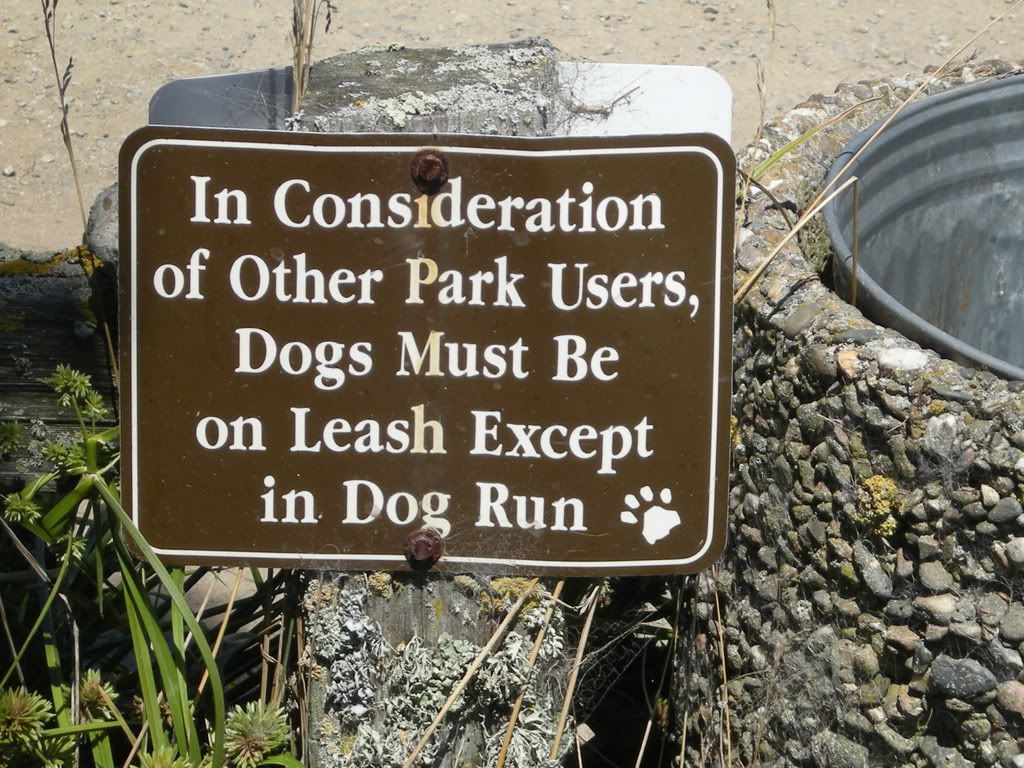
Dog Owners: Leashed by Park Fees?

A new trend is cropping up in dog parks across the country: off-leash fees. Many parks offer enclosed areas where dog owners can bring their pets for exercise and socialization, free from the constraints of leash and lead. Often, these parks require little more from each dogs' owner than an agreement to pick up after their pet. But that may quickly become the exception rather than the rule. After all, those dog waste bags and pet waste stations don't pay for themselves, and many communities are looking at dog parks as an additional source of income.

Marine County Dog Parks - Mill Valley Pictures, Images and Photos

Many dog owners are opposed to the idea of paying to use off-leash areas. Some say they can't afford the extra expense – fees generally seem to range from $40-100 yearly – and are concerned that their pets will have to miss out on exercise and socialization. Additionally, many owners feel that they pay enough already in pet licensing fees. Still others are worried that the fees won't actually be used to maintain the parks, but will instead go towards other programs which they do not utilize. Of course, each community operates its dog parks in its own way; according to various news stories around the Internet, some dog parks would not even exist without the revenue generated by user fees, while others are merely looking to cash in.

Not all owners oppose the fees, though. At least some dog-lovers think that a reasonable fee is a small price to pay for canine happiness, and those who live in areas where the fees will be folded back into the dog parks are looking forward to the improvements that will be made, including additional fencing, equipment and pet waste stations. Indeed, in an online poll at WickedLocal.com, roughly half or all respondents supported usage fees for dog parks.

In the end, this seems to be a local issue. A community with a variety of very nice parks, which charges a reasonable fee, shouldn't have a problem convincing dog owners to chip in. In larger cities, where there are limited options for doggie exercise, owners should factor park fees into the total cost of pet-ownership, just liked food and veterinary care. On the other hand, a community with mediocre parks or very high fees may end up defeating itself if owners choose to find other ways of exercising their pets.

Thanks goes out to Kristina for this guest post.

Sources:

http://www.thedenverchannel.com/news/26310988/detail.html

http://blogs.wickedlocal.com/newton/2010/09/24/take-our-poll-should-dog-owners-pay-to-use-off-leash-parks-in-newton/#axzz1ELxRW6v2

http://blogs.wickedlocal.com/newton/2010/09/23/dog-walking-businesses-dont-care-about-fees/#axzz1Gd2AglX7

http://www.wickedlocal.com/newton/features/x1916541077/Proposal-calls-for-dog-owners-to-pay-for-off-leash-areas#axzz1Gd2GYIdR

http://voices.washingtonpost.com/local-breaking-news/maryland/moco-to-charge-for-dog-parks.html

http://www.myfoxdc.com/dpp/news/maryland/montgomery-county-parks-and-recreation-set-to-charge-for-dog-park-use-071210

http://www.montgomeryparks.org/permits/find/dogparkpermits.shtm


Technorati Tags:

Continue Reading...

Saturday, February 26, 2011

Reinventing the Pet Tag

The MobiPetTags ID Suite kicks the Pet ID industry into the21th century. Using the Microsoft® Tag app and the unique capabilities MobiPetTags, Pet Parents can have quick access to their pet’s information whenever and wherever it’s necessary.

PRLog (Press Release) – Feb 24, 2011 - Reinventing the pet tag, MobiPetTags has advanced from simple pet tags with a number etched on a piece of metal or thick plastic to a modern, high tech one using all of the capabilities of smart phones and the internet. No longer is a pet’s safety dependent upon unreliable and outdated manual record keeping or the drawbacks inherent in microchiping. Once a suite/package has been purchased, the data entered with MobiPetTags is not deleted even if the customer is no longer in contact with the company. In addition, pet profiles are easily updateable.

MobiPetTagNo longer do cats or dogs have to wear multiple tags to prove they have current shots and licenses. The MobiPetTag Suite of services enables Pet Parents to store multiple phone numbers, updates and emergency contacts. It can store microchip identifying numbers, license numbers—old and new, shot histories, medical records, dietary information, certifications and all critical pet information through one quick access pet tag. Owners can even keep records of breeding, training accomplishments, competition awards and special handling instructions all in one place and also tagged on their companion animal.

The MobiPetTag Company is joining the likes of KOA (Kampgrounds of America), Book(ed) Passage, Sports Illustrated, USA Today, Acura, Dentyne, Crown Royal, Foursquare, 3M, Universal entertainment, and the most popular magazine in South America - Huisqenoot Magazine—all businesses which use tag technology. The MobiPetTag System combines the latest in custom 2D bar coding from Microsoft® Tag and the massive capability of the Internet with the 3 billion plus cell phone and computer users to create the largest integrated "Pet Information Portability" System for pets in the world.

The MobiPetTags Suite will enable anyone with an Internet connected cell phone and or a personal computer (over 3 billion in the world today) to identify a lost or injured animal companion immediately by simply scanning the Tag with a mobile phone and with a single click be able to call the owner and/or their veterinarian.

If a pet is lost, making a MobiPetTag emergency call will activate its PetTagAlert system to notify all shelters, clinics, volunteer pet rescuers, animal emergency hospitals, pounds and rescue organizations within a 5 mile radius of where the animal disappeared. Also, an immediate lost pet notification will go out to the national network of MobiPetTag users and social network media (Twitter, Facebook, etc.) accounts. A Pet Parent will receive a quick Lost Pet Kit via email which includes ready to print posters as well as special instructions on what to do.

If a pet is injured, especially away from home, and is rushed to the nearest vet for medical treatment, the MobiPetTag System provides quick and easy access to the animal’s medical records through PetCollarTags, PetCallingCards and PetKeyTags. Such access could make the difference between life and death for the animal.

MobiPetTag is not a membership based system but is an integrated product based system. It provides its customers with a Personal Pet Information web page with the pet’s key information and picture; a Pet Collar Tag for small and large pets that have the Microsoft® Tag (pTag) on one side and the pet’s name and access information on the other; PetKeyTags for your key ring with the pet's name and a pTag to a personal Pet Information Page on the front and a pTag to MobiPetTag online Contact Page on the other side; and finally, a PetCallingCards for a wallet or purse, with the pet's picture the pTag to access its personal Pet Information Page on the front and several critical Internet addresses for quick access on the back—including access to our Lost Pet Report page – just in case!

In addition, MobiPetTag offers an additional Shot History/Medical Records/Certificates Page to store pictures of the companion animal’s medical records from its veterinarian for quick faxing on the spot when these records are needed. Today, groomers, boarding kennels, veterinarians, transport services, animal shows, etc. all require key information (shot history, medical records, show certificates, etc.) about the animals they serve. With our custom designed MobiPetTags’, all that information is only as far away as a cell phone.

MobiPetTags (http://www.mobipettag.com) is dedicated to utilizing technology, especially mobile phone technology to make the life of companion animals easier and safer and to make it easier for Pet Parents to provide the most secure and happy environment for their four-footed friends.

MobiPetTag’s Smart System is a custom 2D bar code application from Microsoft® Tag that provides quick access to your pet’s critical information anywhere/anytime.

Download a copy of the Reinventing the Pet Tag PDF to save to your computer and/or print out.

Technorati Tags:

Continue Reading...

Tuesday, February 22, 2011

Labrador Retrievers in the News

Here are some recent news stories in regards to our lovable Labrador Retrievers:

At only 5 months old, Kahlua -- a rambunctious Labrador-Retriever mix -- has escaped death twice thanks to luck and a cooperation of animal-lovers across two states. Continue Reading: Rescued puppy gets second chance, but still needs more surgery

We all know how perfectly the show dogs at Westminster look and behave each year, but some of these dogs do more than work the ring -- they help change lives as therapy dogs. Wes, the Labrador retriever, is one of these amazing dogs. And he's starting by "teaching" children. Continue reading: Wes the Westminster Show Dog Helps Children Learn to Read and Write

Zeus, a black Labrador retriever who was living in the Mt. Juliet Shelter, is now living in a training facility in Texas where he is learning job skills that will keep him in demand for many years. He is learning how to sniff out bed bugs. Continue Reading: Detection dog sniffs out job as bed bug hunter

The Fire Department has a new tool, and his name is Pepe. Pepe, a 1-year-old yellow Labrador retriever, is a certified accelerant detector who can sniff out chemicals used to start fires, according to the Fire Department. Continue Reading: Beach Fire Department gets new chemical-sniffing dog

Outside the room, Mickey, a black Labrador retriever belonging to Donny's father's fiancée, started crying. That woke up the teen's father, Donny Richardson Jr., who at first thought the dog just wanted to go outside. But when Mickey kept crying and looking toward the bathroom, Mr. Richardson checked on his son. Continue Reading: Dog rescues stricken teen

Terry and Marie Partington had never owned a dog before getting their Labrador retrievers Dakota and Kiera. But they have definitely joined the ranks of dog lovers today. Continue Reading: Cancer-stricken Lab retriever keeps rolling along happily

A winter walk along the river almost turned tragic for a black Lab named Trooper. The dog left his owner’s side to chase birds and fell through ice, according to Brian Adams, spokesman for Boston’s MSPCA-Angell. Continue reading: Amazing Animal Rescues: On Thin Ice

Technorati Tags:

Continue Reading...

Thursday, February 03, 2011

Labrador Retriever Related Headlines - Thursday, February 03, 2011

Here are some headlines for the past couple of days in regards to our lovable Labrador Retrievers:

Labrador Retriever named most popular dog
The American Kennel Club says the Labrador retriever is the most popular dog in America for the 20th straight year.

Labrador Retriever tops AKC's list of popular breeds; bulldog comes in No. 1 in Los Angeles
For the 20th year in a row, the Labrador retriever is America's most popular dog breed, according to registration statistics released last week by the American Kennel Club.

Labrador Retriever can sniff out presence of cancer
A DOG trained to sniff out colorectal cancer was almost as accurate as a colonoscopy in a study that suggests less invasive tests for the disease may be developed.

Labrador Retriever Dogs Can Detect Cancer
Labrador retrievers are not just a guard dog , but they can also detect potential cancers. The animals’ sharp smell is believed to be capable of sniffing chemicals which are released by cancer cells from the human breath and waste.

Technorati Tags:

Continue Reading...

Wednesday, January 26, 2011

Are You An Environmentally Aware Pet Owner?

Next to new parents, pet owners are most likely to spend copious amounts of money on spoiling their ‘babies,” and there certainly is a lot of accessories available to help them do it! Cat and dog owners can pick up fancy collars, tailor made shirts and sweaters, Halloween costumes, booties, perfume, and even heated pet beds. You name it; it’s probably out there waiting for you to buy it! One of the most important accessories that you can ever purchase for your pet - dogs in particular- are pet waste bags. All pet owners know how important it is to clean up after their pet, but have you ever considered how important it is to try to be as environmentally friendly as possible while you’re cleaning up after them?

Think about how many dog waste bags you go through in an average month. If you’re using grocery bags or a cheap throw away type of bag, think about how much plastic ends up in landfills every year just from one single dog. It’s actually quite astounding.

Thankfully, there are products out there that let dog owners keep their yards and neighborhoods clean while still managing to be earth and landfill aware. Biodegradable pet waste bags are an excellent option for animal owners who still want to try to be environmentally friendly. They cost just pennies more, can be purchased in bulk, and come in a ton of different great patterns and colors so you and your dog can do your part while still having a bit of fun with it. If your local pet store doesn’t carry biodegradable pet or dog waste bags, ask them to. Most pet stores are more than happy to carry alternative products if they know that they have customers that want to purchase them.

You can still get the goofy sweaters and bright leashes and fun bows, but adding the biodegradable pet waste bags to your shopping list means that you can feel good about your environmental choices while still spoiling your furry friend.

Technorati Tags:

Continue Reading...

Friday, January 07, 2011

Popular & Unusual Dog Names

2010's Most Popular & Unusual Dog Names Revealed
Brea, California

The nation's oldest and largest provider of pet health insurance has revealed that Bella the most popular dog name among it's customers for the second year running.

Veterinary Pet Insurance (VPI) analyzed the names of the pets of more than half a million customers to come up with a list of the most popular. After 6 years at the top, Max was knocked off the top spot in the 2009 list and Bella became the most popular name for dogs - a phenomenon VPI calls the "Twilight Effect", because of the character Bella Swan in the vampire-themes movies. While Bella has retained the number one spot, the name Max decreased further in popularity and was replaced by Bailey as the second most popular dog name.

Top 10 Dog Names:

Bella
Bailey
Max
Lucy
Molly
Buddy
Maggie
Daisy
Charlie
Sophie

"We know that nearly half of pet owners today view their pets as a part of their family," said Curtis Steinhoff, director of Corporate Communications at VPI. "Given that pets are considered family members, it makes sense that pet owners are selecting human-oriented names like Max or Charlie."

Of the nearly half a million pets insured by VPI, only 13 were named "Fido", reflecting the current trend of owners giving their pets human names. Nearly every dog name on VPI's Top Ten Dog Names list doubles as a popular human name. The company also wanted to find out the most unusual dog names in the company's database. VPI employees selected 50 unusual dog names and voted for the 10 most unusual. They voted "Pickle Von Corndog" as the most unusual, followed by (in descending order): "Lord Chubby Pruneface", "Badonkadonnk", "Ninjastar Dangerrock", "Molly McBoozehound", "Dog Vader", "Flopsy Squeakerton", "Bettie Poops", "Geez Louise" and "Barnaby Bones".

View the latest World Pet News every week at PetPeoplesPlace.com.

Original Source: http://www.petpeoplesplace.com/resources/news/dogs/2010-s-most-popular-unusual-dog-names-revealed.htm


Technorati Tags:

Continue Reading...

Monday, November 22, 2010

ASPCA Issues Thanksgiving Safety Tips

New York City, New York

The ASPCA® has warned that many of the foods and decorations routinely within reach of pets during the holiday season can pose a risk of illness.

Last year the The American Society for the Prevention of Cruelty to Animals® (ASPCA®) Animal Poison Control Center dealt with 17,000 cases of pet illness which was caused by ingesting human foods. Of these, chocolate is by far the worst offender, with dark chocolate being the most damaging to pets. Chocolate contains the alkaloid theobromine which is toxic to dogs, and leads to symptoms including vomiting, diarrhea, hyperactivity, abnormal heart rate and occasionally seizures. Pet owners should also be wary of sweeteners, such as xylitol, which is present in an increasing number of confectionary products. Xylitol can cause a sudden drop in blood glucose and there appears to be a strong link between xylitol ingestions and the development of liver failure in dogs.

While decorating the family home is an essential part of the holidays, many of the items we incorporate into our traditional holiday decorations each year - ribbons, tinsel, glass ornaments, as well as wires, cords, candles, and even Christmas tree water - can all pose potential dangers to pets if left unattended. And the ASPCA warns that plants and flowers should be kept to a minimum. Last year, the ASPCA Animal Poison Control Center received 8,000 calls about potentially poisonous plants and flowers. "Flowers such as lilies, which are commonly used this time of year, can cause kidney failure in cats. The more traditional festive plants such as holly and mistletoe can also be dangerous for cats and dogs alike, causing gastrointestinal upset or, in rare cases with mistletoe, cardiovascular problems. It's best to use non-toxic decorations, such as wood, fabric or even pinecones," said Dr. Wismer, Senior Director of Veterinary Outreach and Education for the ASPCA.

Giving your dog or cat a little turkey may seem like a good idea, but Dr. Wismer warns that the meat may contain bones that can splinter and cause blockages in the throat or digestive tract, and that the grease and fat can cause stomach upset. Additionally, Dr. Wismer strongly urges pet owners to be extremely careful with any alcoholic beverages. "Pets that ingest alcohol can become very sick and may fall into a coma, leading to an untimely death," she adds. If your dog or cat accidentally ingests a potentially toxic substance this holiday season, the ASPCA recommends that you contact your local veterinarian or the ASPCA Animal Poison Control Center.

View the latest World Pet News every week at PetPeoplesPlace.com.

Original Source: http://www.petpeoplesplace.com/resources/news/general/aspca-issues-thanksgiving-safety-tips.htm


Technorati Tags:

Continue Reading...

Wednesday, November 03, 2010

November Marks Fifth Annual National Pet Cancer Awareness Month

Cancer Among Most Common and Costly Pet Conditions

BREA, Calif., Oct. 29 /PRNewswire/ -- Cancer is not strictly a "human" condition. As the No. 1 disease-related killer of dogs and cats, cancer claims millions of pets each year. This November, Veterinary Pet Insurance Co. (VPI), the nation's oldest and largest provider of pet health insurance, will seek to increase awareness about the prevalence, detection and treatment of pet cancer during its fifth annual Pet Cancer Awareness Month. To raise funds for pet cancer research, VPI has partnered with the Animal Cancer Foundation (ACF) and organized its third annual VPI K9K Pet Cancer Awareness Walk in Long Beach, Calif. on Nov. 14. VPI also provides pet cancer detection tips and urges ACF donations through the purchase of pet cancer awareness collars and wristbands at www.petinsurance.com/cancer.

VPI started Pet Cancer Awareness month in 2005 after noticing that cancer diagnoses often caught pet owners by surprise. Many either did not know their pets could develop cancer or underestimated the cost to treat cancerous conditions. In 2008, VPI received nearly 30,000 claims for pet cancer. The most common form of pet cancer, lymphosarcoma, made up about a fifth of those claims. Other common forms of pet cancer included: mast cell tumors, fibrosarcomas (which stem from connective tissues), and hemangiopericytomas (a tumor generally located on a limb). Other types of neoplasias --defined as a growth or tumor--were commonly found on the liver, spleen or eyelid.

Overall, cancer claims were the sixth most common type of medical claim received by VPI in 2008. According to VPI's claims data, which draws from a population of more than 474,000 insured pets, following are the 10 most common types of cancer found in dogs and cats:

Top Pet Cancer Claims in 2008

1. Lymphosarcoma
2. Mast Cell Tumor
3. Neoplasia - Spleen
4. Neoplasia - Eyelid
5. Osteogenic Sarcoma
6. Neoplasia - Liver
7. Neoplasia - Thorax
8. Neoplasia - Brain or Spinal Cord
9. Fibrosarcoma
10. Hemangiopericytoma

The cost of treating a pet with cancer varies depending on the type of cancer and the length of therapy. If chemotherapy or radiation treatment is required, costs can reach more than $10,000 over several sessions. To ensure that VPI policyholders are able to pursue optimal cancer treatment, VPI offers an optional cancer-specific rider that attaches to its base medical plans. The cancer rider supplements benefit allowances available for treatment of eligible cancerous conditions.

To detect cancer early, pet owners should be attentive to any growing lump or sore that fails to heal, drastic changes in a pet's appetite or weight, unusually strong odors coming from a pet, discharge or bleeding from any body opening, difficulty chewing or swallowing, or an unwillingness to exercise. More detection tips and information on Pet Cancer Awareness Month can be found at www.petinsurance.com/cancer.

For more information on the Animal Cancer Foundation, visit www.acfoundation.org.

Note to editors: VPI can provide state-specific cancer data and digital images of Pet Cancer Awareness dog collars and wristbands. Send requests to gbiniasz@petinsurance.com.

About Veterinary Pet Insurance

Veterinary Pet Insurance Co./DVM Insurance Agency is the nation's oldest and largest pet health insurance company and is a member of the Nationwide Insurance family of companies. Providing pet owners with peace of mind since 1982, the company is committed to being the trusted choice of America's pet lovers and an advocate of pet health education. VPI Pet Insurance plans cover dogs, cats, birds and exotic pets for multiple medical problems and conditions relating to accidents, illnesses and injuries. Optional VPI CareGuard(SM) coverage for routine care is also available.

Medical plans are available in all 50 states and the District of Columbia. More than 2,000 companies nationwide offer VPI Pet Insurance as an employee benefit. Policies are underwritten by Veterinary Pet Insurance Company in California and in all other states by National Casualty Company, an A+15 rated company in Madison, Wisconsin. Pet owners can find VPI Pet Insurance on Facebook or follow @VPI on Twitter. For more information about VPI Pet Insurance, call 800-USA-PETS (800-872-7387) or visit petinsurance.com.

SOURCE Veterinary Pet Insurance Co.

Technorati Tags:

Continue Reading...

Saturday, October 30, 2010

Dogs Recognize Their Owner's Face

A new study has demonstrated just how much dogs rely on seeing their owners faces in order to recognize them.

The study, titled "Selective attention to humans in companion dogs, Canis familiaris", is to be published in an upcoming issue of the journal Animal Behavior. The research team, led by Paolo Mongillo from the University of Padua in Italy, discovered that dogs found great difficulty in recognizing their owner when they had their face covered, and that they prefer to look at their owner than a stranger.

In the experiment, dogs were exposed to their owner and an unfamiliar person entering the room and leaving through different doors. At the end of the test, the dogs were allowed to approach the doors. The researchers measured the average length of time the dog's visual orientation was aimed towards the different targets. Dogs gave preferential attention to their owner, and specifically spent much more time gazing at the door through which their owner left the room. The researchers repeated the experiments when the head of the people entering and leaving was not visible. In these experiments, the amount of time spent watching their owner and the door through which they left the room decreased significantly.

"Most of the dogs gazed at their owners for most of the time and then chose to wait by the owner's door. If you imagine a dog in a real setting in a city or anywhere in the middle of a crowd or a crowded space, you can see how the animal must have adapted to give preferential attention to its owner," Dr Mongillo told the BBC. He described how this behavior was entirely expected, but that it had simply never been definitively measured before.

Perhaps the most interesting implication of the study is how dogs have adapted to live with humans. In wild dog packs, individual members rely on body signals and scent from other animals in their social group, but this study suggests that domestic dogs have adapted to rely on other cues when living with humans, since their human owners are not able to communicate through canine body language.

View the latest PetPeoplesPlace.com.

Original Source: http://www.petpeoplesplace.com/resources/news/dogs/dogs-recognize-their-owner-s-face.htm


Technorati Tags:

Continue Reading...

Thursday, October 07, 2010

Spooktacular fashion for dogs this Hallowe’en

Hallowe'en fashion for dogs by UrbanPup.com

FOR IMMEDIATE RELEASE

PRLog (Press Release) – Sep 30, 2010 – Make your dog the best dressed this Hallowe’en with their very own ghoul-tastic slogan t-shirt from UrbanPup.com.

To design their t-shirt, simply choose a slogan from the UrbanPup.com Hallowe’en library, pick your colour and leave the rest to UrbanPup.com. Or, if you’re feeling creative, you can have your own phrase emblazoned across your pup’s threads.

Either way, UrbanPup.com will make your bespoke slogan t-shirt from high quality, fine knit gauge, 100% cotton with a velvety-feel cotton-flock text. Design your own hoodies and harness t-shirts are also available.

Happy Hallowe’en from http://www.UrbanPup.com!

Contact:

For a sample of more information contact Denis Kelly on +44 28 9581 2107 or denis@urbanpup.com

For more details, go to the press section at urbanpup.com

Contact urbanpup.com for a sample.

UrbanPup.com is an online Pet Boutique offering Designer Dog Fashions, Dog Coats, Dog Sweaters & Hoodies, Bling Dog Collars and Harnesses, Dog Accessories, Dog Dresses and Pet Carriers.

Technorati Tags:

Continue Reading...

Monday, September 27, 2010

$10 Million Gift Establishes Cornell Canine Genomics Program

$10 Million Gift Establishes Cornell Canine Genomics Program
Ithaca, New York

A single donation of $10 million to Cornell's College of Veterinary Medicine will establish the world's first canine genetics program.

The recent anonymous donation of $10 million to Cornell was the largest ever received by the College of Veterinary Medicine. The gift will ultimately fund research that will enhance the ability of scientists to fight cancer and other diseases that affect animals and humans. After hundreds of years of selective breeding, canine genetics is quite unique and holds information not available in other genomes.

"We know that each breed possesses a unique and highly similar collection of genes, which confer susceptibility to certain diseases and constitute a stunning opportunity for gene association studies that cannot be performed in people. These investigations can be done non-invasively in dogs and will inform our understanding of the specific genes that result in susceptibility to some of our most serious diseases," Michael I. Kotlikoff, the Austin O. Hooey Dean of Veterinary Medicine at Cornell, told Cornell's ChronicleOnline.

"The recognition of the commonality of disease between animals and man precedes modern medical education and continues to drive discovery that informs animal and human health. What better gift could 'man's best friend' provide than the information necessary to more fully understand and combat these devastating human and animal diseases. This inspiring gift will have an enormous impact on both canine and human health and is testimony to the vision and generosity of one of the college's most committed friends," continued Kotlikoff.

The initial investment from the gift will recruit a faculty member in biostatistics to lead the comparative genomics effort and then to recruit a new faculty member in cancer biology. The gift will ensure that both posts will be permanent positions.

View the latest World Pet News every week at PetPeoplesPlace.com.

Original Source: http://www.petpeoplesplace.com/resources/news/dogs/10-million-gift-establishes-cornell-canine-genomics.htm

Technorati Tags:

Continue Reading...

Friday, September 10, 2010

Weather Petcast

Weather.com is offering a new free service called Personal Petcast to determine how your dogs will fare in the expected weather for the next few days.

The Personal Petcast service is very easy to use. After typing in your dogs size, length of hair, age and zip code, you will be presented with the PetCast for location.

Features of the Petcast features include:

Dog Comfort Index - estimates how comfortable your dog will be outdoors in forecasted weather conditions.

Flea Activity Graph - shows graph with past weather data to illustrate when fleas are most likely to be active in your area.

Dog Care Guide - provides expert advice on how to keep man's best friend healthy and happy.

Other features include best time to walk your dog, mosquito activity, dog videos, dog weather maps, park locator and daily tips.

Heading outdoors with your Labrador Retriever? Visit the Personal Petcast to see how you lovable Labrador will fare in the weather.

Technorati Tags:

Continue Reading...

Thursday, July 08, 2010

Recall Alert: United Pet Group Voluntarily Expands Recall of Nutritional Supplements For Dogs

"United Pet Group Voluntarily Expands Recall of Nutritional Supplements For Dogs to Include Additional Tablet and Powdered-Form Products for Dogs and Cats Because of Possible Salmonella Health Risk"

United Pet Group, Cincinnati, Ohio is voluntarily expanding its recent recall of its Pro-Pet Adult Daily Vitamin Supplement tablets for Dogs to include additional pet nutritional supplement products for dogs and cats due to possible Salmonella contamination.

The recalled products are sold nationally at various retailers. The products include various United Pet Group Pro-Pet and Excel branded products for dogs and cats, and certain other private label brands of the same products. All of the affected products are in tablet and powdered form. These products are being removed from retail stores and consumers should immediately stop feeding these supplements to their pets. The affected products are those with expiration dates that include and are between "01/2013" and "06/2013." Products with expiration dates earlier than 01/2013 or later than 06/2013 are not included in this recall. The expiration date can be found imprinted vertically on the right side of the product label.

Laboratory testing has revealed that some lots of some of these products may be contaminated with Salmonella. The company is recalling the additional products out of an abundance of caution.

Pets with Salmonella infections may be lethargic and have diarrhea or bloody diarrhea, fever, and vomiting. Some pets will have only decreased appetite, fever and abdominal pain. Infected but otherwise healthy pets can be carriers and infect other animals or humans. If your pet has consumed the recalled product and has these symptoms, please contact your veterinarian.

People who handle these products can become infected with Salmonella, especially if they have not thoroughly washed their hands after having contact with them or any surfaces exposed to these products. Healthy people infected with Salmonella should monitor themselves for some or all of the following symptoms: nausea, vomiting, diarrhea or bloody diarrhea, abdominal cramping and fever. Rarely, Salmonella can result in more serious ailments, including arterial infections, endocarditis, arthritis, muscle pain, eye irritation, and urinary tract symptoms. Consumers exhibiting these signs after having contact with the product should contact their healthcare providers.

To see the TABLE OF RECALLED PRODUCTS and read more about this expanded recall visit:

United Pet Group Voluntarily Expands Recall of Nutritional Supplements For Dogs

Technorati Tags:

Continue Reading...

Blog Archive

dog videos, cat videos, puppy videos, kitten videos, pet videos

Followers

Syndication

  © Blogger templates The Professional Template by Ourblogtemplates.com 2008

Back to TOP