Showing posts with label Safety. Show all posts

Tuesday, April 23, 2013

Pet First Aid: Are You Aware and Prepared?

Even the most vigilant pet owners happen upon the occasional accident and must be prepared to respond with proper care. By being prepared in advance of pet emergencies, we can do so much more to prevent a disastrous outcome.

The following infographic, coutesy of 1800PetMeds, focuses on raising awareness for pet first aid facts and offers helpful tips for pet owners in the event of a pet emergency.

You'll learn more about common call for pet first aid, poison/toxin ingestion, pet CPR, dangers on the road/household, assembling a complete first aid kit and more.

Take a moment to review this infographic and help raise awareness of Pet First Aid by sharing what you learn with fellow pet owners.

Pet First Aid Infographic
Courtesy of: 1800PetMeds.com


Disclosure: This post contains affiliate link(s), which may result in compensation for AllAboutLabradors.blogspot.com. For more information about All About Labradors please read our Disclaimer and Disclosure Policies. We've shared this information to inform you of your option to either use our affiliated links or to go directly to the site of interest.

Continue Reading...

Monday, April 15, 2013

PetHub.com’s Award-Winning Pet ID Tags Embedded with NFC Wireless Communication Technology

"Just in time for National Pet ID Week (April 14-20), new technology makes it possible for a lost pet to be reunited with their owner-- by simply tapping a cell phone to the pet’s ID tag.

PetHub.com’s Award-Winning Pet ID Tags

Near Field Communication (NFC) technology is now embedded into PetHub’s award-winning pet ID tags, which are already equipped with a unique QR code, web address and traditional toll-free phone number.

New NFC Dog & Cat Tags (21st Century Pet Tags)

The American Humane Association says that 1 out of 3 pets will be lost at some point during their lifetime and that only about 17 percent of lost dogs and two percent of lost cats will be returned to their original owners. You can imagine how much pet owners will love this new tech-enabled pet ID tag!"


Disclosure: This post contains affiliate link(s), which may result in compensation for AllAboutLabradors.blogspot.com. For more information about All About Labradors please read our Disclaimer and Disclosure Policies. We've shared this information to inform you of your option to either use our affiliated links or to go directly to the site of interest.

Continue Reading...

Wednesday, October 24, 2012

Electric Pet Fencing: An Affordable Way to Keep Your Pets Safe

The outside world can pose a myriad of dangers to our pets, from cars and aggressive animals to toxic food and harsh weather. Many animals who escape from their homes end up in shelters as strays. If they’ve lost their ID tags along the way, it is likely that they will never see their original home again. The National Council on Pet Study and Population estimates that 98% of stray cats and 80% of stray dogs never return home. If these animals are lucky, they will be adopted by a nice family, but the majority of strays do not fare so well. With so much at stake, it is imperative that pet owners ensure that their pets stay safely on their home property. Training is an essential part of the plan, but you will need to take additional precautions to prevent losing your pets.

If you own a dog, you need to fence in your yard to ensure that they remain safely on your property. However, because permanent fencing can be quite costly to erect, many dog owners neglect to do this. Electric pet fencing offers an affordable solution to contain your pets. Not only are they relatively inexpensive, they are convenient, and super easy to install. Electric pet fences offer you the flexibility to change the configuration of your fence at will, and also give you the option of removing the fence and taking it with you if you move house; saving you cost of purchasing a new fence when you move into your new abode.

Electric pet fences also have numerous other benefits: they are durable, weatherproof, and require little maintenance; pets quickly learn to respect the boundaries of the fence and stay away, consequently dogs are less likely to dig under or jump over an electric fence than a solid fence.

Above ground electric pet fences not only keep pets in, they are also effective at keeping predators and other unwanted critters out, ensuring that your pets are protected from wild animals that could cause them harm or pass on disease. They can also be used with great effect to keep pets out of sensitive areas in your garden, such as flower beds or your veggie patch, or to keep cats and other predators away from fish ponds or bird aviaries.

Electric pet fencing is available in kit form – the kits contain all the necessary equipment to enable you to quickly install an electric fence to contain your pets. Typically a kit will consist of electric fence wire, PVC fence posts, a grounding rod, and accessories such as connectors and possibly a fence tester. In addition, you will need an energizer to keep the fence charged – the type and size of the energizer will depend on how long your fence is, and the type of animals you wish to contain or exclude, but generally a small, low-powered energizer is adequate for pets. Energizers can be AC powered, battery powered, or even solar powered, allowing you complete flexibility in all situations.

Disclosure: This post contains affiliate link(s), which may result in compensation for AllAboutLabradors.blogspot.com. For more information about All About Labradors please read our Disclaimer and Disclosure Policies. We've shared this information to inform you of your option to either use our affiliated links or to go directly to the site of interest.

Continue Reading...

Tuesday, September 11, 2012

How to Build a Doghouse

To dog owners, a canine is more than a pet; it’s a family member. You obviously love your four-legged friend, and having a good house built for them to sleep in after a hard day of playing outside is important. Have you never built a doghouse before? No worries. From the planning stages to the finishing touches, this handy step-by-step guide will help you build a home for your beloved dog in no time at all.

Preparation

Before you go launching into the building, you need to make certain you have the woodworking tools necessary to complete a build. You can construct an entire doghouse using nothing but hand tools, like a saw and hammer, but you might consider using an electric or battery-powered screwdriver or circular saw to save you some time.

Plan to build the doghouse to fit your dog after it is fully grown. Some dogs grow very quickly, and you don't want to replace doghouses like you'll have to replace collars.

Also note that pressure-treated woods are treated with chemicals that can be toxic to your dog. If you must use pressure-treated woods, make sure you don't use them on any part of the house that your dog can come in contact with.

Step 1: Foundation

When you measure the wood for the foundation, plan to give your dog enough space to go all the way into the house and turn completely around. Then, using 2x4” boards, piece together a frame for the foundation that will keep the whole house together. Nail or screw these boards together at the corners. Cut a piece of plywood to act as the floor of the house, and then secure it over the frame using nails or screws. If your doghouse is particularly large or your dog will be heavy, consider using 2x4” boards as support beams beneath the plywood.

Step 2: Walls

Again using 2x4” boards, build a frame for the two sidewalls. Use a 2x4” board in the center of each wall for support. Make sure to secure each piece of wood with either nails or screws. When building the rear wall, place the center stud about 2 inches off center to allow for the roof strut.

Now, build the frame for the front wall. Since there will be a space for your dog’s entrance on this wall, do not use a center stud.

Measure, cut, and fit 1/2” plywood over the wall frames. On the front wall frame, use a saw (preferably a jig saw) to cut a hole large enough for your dog at full-size to easily enter.

Attach these walls to the foundation using screws or nails through the bottom of the wall frame.

Step 3: Roof

Using 2x4” boards, place and center the front and rear roof struts at the top edge of the front and rear wall frames. Nail or screw these into place. Determine how much overhang you want with the roof, and cut the top ridge board for the length of the doghouse plus the desired overhang. Position it and nail it on top of the struts.

Cut three rafters per each side (a total of six). They will need to be mitered to fit the angle of the roof. These rafters will be notched to fit on the wall frame of the house. Using the front edge of the house and the ridge board overhang, mark the notches with a pencil, and then cut them with a saw. Attach the rafters where they meet the wall frame. Measure and cut the overhang rafters. Attach them to the top ridge board. Cut two pieces of 1/2” plywood to fit the roof, and then attach using nails or screws.

Shingling a doghouse roof will keep the house in better shape for a longer amount of time. Overlap the shingles neatly as you attach them to the roof.

Step 4: Customize

The hard part is finished! Decorate the doghouse to your pooch’s personality, with paint or any other decorations. Add some straw or some carpet to help your dog stay warm at night. This is your opportunity to make the project your own.

Guest Article Author Bio: Maire is an animal lover and home fixer upper. She enjoys writing too, especially on behalf of Sears and other brands she trusts.

Continue Reading...

Wednesday, August 01, 2012

Free Dog Safety Light on 08/01 - 08/03 at 8:30PM EST (first 100)

Starting today, August 1 thru August 3, My Favorite Pet Shop is offering Free Dog Safety Lights at 8:30PM EST. The first 100 people on each of those days will get a Free Dog Safety Light.

Free Dog Safety Light on 08/01 - 08/03 at 8:30PM EST (first 100)

To get your Free Dog Safety Light:

1. Sign with Facebook account
2. “Like” its page
3. Share with friends
4. Click “Get Started”


Disclosure: This post contains affiliate link(s), which may result in compensation for AllAboutLabradors.blogspot.com. For more information about All About Labradors please read our Disclaimer and Disclosure Policies. We've shared this information to inform you of your option to either use our affiliated links or to go directly to the site of interest.

Continue Reading...

Monday, July 09, 2012

Free PetHub “Blue Fetch” Digital ID Dog Tag

To celebrate 10k Facebook fans, PetHub is giving away Limited Edition “Blue Fetch” premium digital ID tags!

Sign-up for the PetHub Newsletter & get a FREE “Blue Fetch” Digital ID Tag.

Limited to one per person, while supplies last (meaning…if they run out of tags, we’ll stop the giveaway)!

Tag must be activated first at PetHub.com and linked to a pet profile to work.

Continue Reading...

Tuesday, June 05, 2012

Petching.com: Lost & Found Pet Locator

Petching.com is offering a very helpful tool should your lovable Labrador Retriever gets lost.

With their interactive Lost & Found Pet Locator, which is powered by Goggle Maps, you will be able to search if anyone has located your dog or cat.

You'll also be able to post that your dog or cat is lost and post that you have found a missing pet.

Continue Reading...

Tuesday, May 15, 2012

Flea and Tick Season 2012: It's Early and It's Ugly

Well, the good news for many of us across the U.S. is we had a mild winter with above-average temperatures and not a lot of snow.

The bad news is warm winter weather means an early and heavy bug season, specifically for fleas and ticks.

These pests are surfacing from their dormant life cycles sooner rather than later this year.

In fact, many veterinarians are predicting a 2012 flea and tick season that will be the worst in a decade.

And it's already underway in some parts of the country.

No Need to Panic

Widespread panic is more or less what the sellers of chemical pest preventives would like to see as a result of an early and heavy flea and tick season this year.

But before you start having nightmares about massive flea infestations or blood-bloated ticks all over your dog -- which could easily prompt you to run out and buy every chemical pest agent you can find – take a deep breath.

Everything you need to do to control pests on your pet this year falls into these three easy-to-remember categories:

* Keep your pet pest-free
* Keep your home pest-free
* Keep your yard pest-free

I strongly discourage pet owners from automatically applying harsh chemical agents to repel or kill pests. I see animals every day at my Natural Pet clinic that suffer from the side effects of toxic chemicals and drugs they were exposed to for any number of reasons, including pest control.

And to make matters worse, many of these pets still get fleas and ticks even with the use of toxic chemical agents.

That's why I believe in using natural pest repellents and other non-toxic pest control methods whenever possible.

If you live where fleas and ticks are prevalent during the warmer months, vigilance in keeping your pet, your home and your yard pest-free should allow your four-legged companion to enjoy his summer right along with the rest of the family.

All Natural Tips for a Pest-Free Pet

If fleas are a problem, comb your pet with a flea comb at least once a day, every day during pest season. Do the combing on a white towel or other light colored cloth so you can see what's coming off your pet's coat and skin as you comb.

Flea 'dirt' (actually flea feces) looks like real dirt, but when suspended in a little rubbing alcohol or water will dissolve and release a red color (blood) allowing you to discern real dirt from flea dirt.

Drop the combings into a bowl or other container of soapy water and flush it down the toilet when your combing session is over.

Bathe your pet. A soothing bath will kill fleas (via drowning), help heal skin irritation, and make your furry companion feel more comfortable and less itchy. Also, clean animals aren't as attractive to fleas. Pick a non-grain (no oatmeal) shampoo specifically for pets.

Be aware that some pets have a condition called flea allergy dermatitis (FAD), which is sensitivity to flea saliva. This is actually a very common condition in dogs. It's not the bite of a flea that causes most of the itching, it's the saliva. And the saliva can cause irritation way out of proportion to the number of fleas on your pet.

That's why lots of dog owners assume the terrible itching their pet is enduring can't be flea related because they don't see any fleas. In fact, a pet with FAD can be made absolutely miserable from the saliva of just one or two fleas. And it can make her uncomfortable for many weeks – long after the fleas are dead and gone.

If ticks are a problem where you live, the best way to control them is through daily grooming and nose-to-tail body checks of your pet. You should examine your dog or cat closely for ticks whenever he's been outside, and at least once a day, regardless.

If you should find a tick attached to your pet, it must be removed carefully and safely.

Don't squeeze the tick, pull on it, press down on it, burn it, or otherwise try to kill it while it's still embedded in your pet. You don't want to inadvertently harm your dog or cat, and you don't want to cause the tick to secrete more saliva into your pet or leave pieces of the rostrum (the 'sticker') embedded in your pet's skin.

The safest way to remove a tick is with a twisting motion. Our Tick Stick tick removal tool is great to have on hand if you ever need to get a tick off your pet.

In addition to the above suggestions, I also recommend you make liberal use of an all-natural pest repellent like Natural Flea and Tick Defense, which is effective against flies and mosquitoes as well. It contains all natural ingredients -- safe oils and pure water.

Other safe alternatives to chemical pest repellents include cedar oil (specifically formulated to be applied to pets) and natural food-grade diatomaceous earth (DE) (both of which can be applied directly to your pet's skin and coat – follow label application instructions), and fresh garlic (it must be fresh, not processed -- work with your holistic vet to determine a safe amount for your pet's body weight).

Don't waste your money on garlic in pill form or brewer's yeast pills. The B vitamins found in brewer's yeast responsible for boosting the immune system can be naturally delivered by feeding your pet a meat based, living food diet. I don't recommend feeding allergenic brewer's yeast to pets.

Powdered garlic or garlic in tablet form has lost the medicinal component, Allicin, found in fresh garlic. Garlic pills can be dangerous to pets.

DE can also be added to your pet's food if your pet has internal parasites. DE is not effective against heartworms as they are present in the bloodstream, where DE isn't.

All Natural Tips for a Pest-Free Home

Your first line of defense against a flea infestation in your home is to keep your pet pest-free using the suggestions outlined above.

Vacuuming all the areas of your home your pet has access to is a given in controlling fleas indoors. Vacuum the carpet, area rugs, bare floors, upholstered furniture, pillows, your pet's bedding and even your own if your pet sleeps with you.

Use the crevice tool and other nifty attachments to vacuum along the baseboards and around the corners and edges of furniture. Don't forget to vacuum hard-to-reach places like under furniture, beds and closet floors.

Dump the contents of your vacuum as soon as you're finished and get them out of the house.

If feasible, designate a single sleeping area for your pet – preferably one you can clean easily. Fleas accumulate in pet sleeping spaces, so if you can limit those, it will be easier to control the situation.

Your dog's or cat's bedding should be vacuumed daily and washed frequently.

You can apply a light dusting of food grade diatomaceous earth (DE) on your carpets, bare floors, and pet bedding. Make sure the DE is food grade, not pool filter grade as the latter is toxic if ingested.

Like diatomaceous earth, cedar oil can be applied to your environment and pet bedding, as well as directly on your dog or cat. It is an all-natural insect repellent. Pestigator.comi has a wealth of information about the use of cedar oil as well as a wide variety of cedar-based products for indoor, outdoor and direct pet application use.

You can apply sodium polyborate powder to your carpets and wood floors to get rid of fleas at the larval stage. Instructions at Fleabusters.comii state you should keep pets and children out of the room while you're applying the product, but they can come into the area safely immediately afterward. The powder works for a year once it's applied unless you have your carpets steam cleaned.

All-Natural Tips for a Pest-Free Yard

Keep your grass mowed, weeds pulled, and bushes trimmed. Clear away debris as it accumulates and do regular inspections of your property for places where pests are apt to hide and multiply.

Food grade diatomaceous earth can also be used to control pests in your yard. However, it doesn't work immediately and must be reapplied frequently (monthly for best results). To use dry with a powder applicator you'll need about 1 pound per 500 square feet. You can also mix it up as a paste and apply it with a hose-end sprayer, using 2 tablespoons per gallon of water.

Mosquito Barrieriii is an all-natural, liquid garlic based solution that can be sprayed on your lawn. Its repellent effect should last about a month according to the manufacturer.

Nematodes are microscopic roundworms that eat flea larvae. Many people have had success using them in their gardens and yards to keep the flea population under control.

Under the right conditions, nematodes work quite well. They can be applied with a lawn sprayer and have been known to reduce the flea population by 80 percent in 24 hours.

More research is needed, but it seems nematodes are most effective in moist, sandy soil away from direct sunlight. The worms don't survive in the hot sun. (Fortunately, neither do fleas.) Nematodes can be purchased at some pet stores, nurseries and online.

When a Chemical Preventive or Treatment is Unavoidable

I can't overemphasize the need to avoid the unnecessary application of chemical products due to their known and suspected levels of toxicity.

However, if you're faced with a situation in which you have no choice but to use a chemical pest preventive on your dog or cat, here are some ways you can reduce the danger, especially of spot-on products:

* Follow dosing directions precisely. If your pet is at the low end of a dosage range, step down to the next lowest dosage. Be extremely cautious with small dogs and do not under any circumstances apply dog product to your cat.

* Don't depend exclusively on chemical treatments. Rotate natural preventives with chemical ones. An every other month rotation works well for many pet owners at my practice. Many of my clients are able to apply one round of chemicals in the spring and another in late summer and completely avoid infestation while dramatically reducing the frequency of chemicals used.

* Monitor your pet closely for adverse reactions after you apply a chemical product – especially when using one for the first time.

* Since your pet's liver will be tasked with processing the chemicals that make it into the bloodstream, it can be very beneficial to give your dog or cat a supplement to help detoxify her liver. I recommend milk thistle, which is a detox agent and also helps to actually regenerate liver cells.

You can get milk thistle through your holistic vet, who should also guide you on how much to give your pet depending on age, weight and other prescribed medications. I recommend one dose daily for seven days following any flea, tick or heartworm application.

I also recommend chlorella, a super green food that is a very powerful detox agent. Your holistic vet should also advise you about how much chlorella to give your pet.

If you use both these cleansing products throughout the summer, you can help protect your pet's liver from the toxic effects of chemical pest preventives.

The Bottom Line

No matter what combination of pest repellent systems you use, including chemical agents, your pet can still attract pests and parasites. In fact, even animals loaded with chemicals to the point of toxicosis can still, for example, acquire heartworm.

My advice is do all you can to avoid pests, relying on natural preventives as much as possible, and then have your vet run a SNAP 4Dx test every six months to check for the presence of heartworm and tick-borne diseases (Lyme, Anaplasmosis, and Ehrlichia).

Also, again thanks to the mild winter we had, I'm seeing a lot more positive fecal results for GI parasites. I recommend you have your vet check a sample of your pet's stool twice a year as well.

References:

i Pestigator.com
ii Fleabusters.com
iii Mosquito Barrier

Source: KETKNBC.com March 30, 2012

Continue Reading...

Friday, May 04, 2012

Dog-E-Glow Lighted Collars Giveaway

Walking your Labrador Retriever will be much safer if you are the winner of the Dog-E-Glow Lighted Collars Giveaway.

Dog-E-Glow Lighted Collars

Mother Moment is running a giveaway for your chance to win a safe and stylish Dog-E-Glow collar. "These collars use 100,000-hour LED bulbs and will run approximately 150 hours on one set of batteries." Collars come in different designs for male or female dogs (Pink Camouflage, Skulls, College Sports Collection, Striped Hearts and more).

If your interested in a chance to win a Dog-E-Glow Lighted Collar, visit the Mother Moment and enter the Dog-E-Glow Lighted Collars Giveaway by leaving a comment with your pet and what design you think is the cutest. Deadline is May 5th.

Technorati Tags:

Continue Reading...

Wednesday, January 11, 2012

Labs and Backyards: An Extensive Overview

This guest post is written by Ian B for Design 55 Online.

Dog-proofing your house for a new Labrador Retriever can be quite daunting. Horror stories of torn up couches, dozens of destroyed pairs of shoes, and articles of clothing that have been demolished beyond recognition are common. The easiest, most practical way to protect your house from a new lab is to invest in a backyard designed for your lab. A well-exercised dog is a content dog. In addition to being a happier, healthier dog, a well-exercised dog invariably causes significantly less damage than their unexercised counterparts.

A backyard is the ideal place for a dog to exercise. Striking a perfect combination between a dog’s need and your own is essential to any backyard. Both your own needs and your lab’s needs must be accounted for if you want to achieve the perfect, lab-friendly backyard.

A lab is an extremely active dog. A backyard must be large enough to accompany the dog’s ferocious appetite for exercise. Many factors must be taken into consideration, but if a yard isn’t large enough, the lab is sure to find it unsatisfactory. The first step to design a backyard for your lab is to dog-proof your backyard.

A fence, in this case, is essential. Two different categories of fences are available for purchase: electric fences and traditional fences. An electrical fence requires significant amounts of preparation, from digging up and implanting the boundaries to training your dog the boundaries of the electrical fence.

A traditional fence is almost always a better option as it is more effective and also doubles as a security feature. The fence must be tall enough the dog can’t easily leap over it, and it must extend several feet into the ground to discourage a dog digging and crawling underneath the fence.

The actual landscaping the background is essential to building the perfect lab-friendly backyard. Small shrubs and flowers are almost always a safe bet, and grass is an essential part of creating a lab-friendly backyard. Several plants should be avoided at all costs, however, due to their toxic ingredients. Tulips, rhododendrons, and lilies are the most common toxic plants, but a complete list of toxic plants and plants harmful to canines can be found on the ASPCA website.

A doghouse or other shelter is an important part of a backyard. The shelter will provide protection from the elements on rainy or cold days, and also double as a shaded little den for the labs to escape from the sun. The doghouse also adds a sense of home for the dog, and ensures a happy and content dog. A shelter is absolutely essential if the dog plans on sleeping outside. A blend natural materials and hard, man-made materials provides a nice compromise of materials for a lab. The lab will often vouch for a brick laid path of a concrete patio that absorbs sunlight during chillier days. The soft grass, of course, is the more suitable material for dogs and a backyard should never consist of only man-made surfaces.

A built in water feature is a luxury, but its practicality far outshines its upkeep. A pond, in particular, is a picturesque addition to a backyard that ensures your lab will be well hydrated and healthy during even the hottest of days. While a pond is a luxury and not a necessity, it will ensure a constant supply of water and will prevent dehydration. The water in the pond or fountain must not be stagnate, however, or the water will not be fit for your lab to drink.

Following the basic procedures will result in a backyard suitable for any lab. A well maintained backyard, designed with a lab in mind, is an essential part of keeping your dog healthy, active, and away from destructive behavior.

Ian B writes for Design 55 Online which specializes in Umbra homeware.

Technorati Tags:

Continue Reading...

Wednesday, December 07, 2011

16 Dog Care Tips that Could Save your Puppy's Life

The essential guidelines for puppy-proof your home and identifying illness

As a new puppy parent, it's important to learn about common puppy behavior, safety concerns and common symptoms of illness so that appropriate action can be taken if your puppy gets sick or hurt. When you bring a new puppy home, you are suddenly responsible for an innocent life—one that’s completely dependent on you. However, when puppy poops on the floor or whines all night long, you might be thinking, “What the heck have I gotten myself into?”

Between managing the puppy’s training and worrying if you’ve puppy-proofed your house adequately, new dog ownership can be overwhelming. Proper dog care and training are critical during your puppy’s first few months in their new home. If you suspect your puppy might be sick, take him or her to the vet immediately. For common digestive ailments and bumps and scratches, your vet will probably prescribe an over-the-counter human treatment, like Pepto Bismal or an anti-biotic ointment, to treat upset stomach and abrasions. However, for more serious conditions, like kennel cough, your vet will likely prescribe more expensive animal drugs. A great way you can save money of on medication is to buy affordable Canadian drugs from a reputable online pharmacy.

It’s a good rule of thumb, to check with a veterinarian first if you suspect your pet is hurt or ill, however to make things easier on you and safe for puppy at home, we’ve put together a list of essential puppy care tips that will help you puppy-proof your home and identify if your puppy is sick:

1. Get a crate for your puppy—and use it

A crate not only makes housetraining easier, it a fantastic tool for managing the safety of your young pup. A crate is a private area for your puppy where they feel secure and stay safe when you’re not at home from dangerous household items, such as electrical wires, household cleaners and poisons, or choking on foreign objects. An added bonus is that the crate will help the housebreaking process and discourage any bad messing behaviors.

2. Put puppy’s crate next to your bed for the first few nights

This will help establish the crate as a safe haven for your pup. If you make him or her sleep the first few nights in the dark basement or laundry room the pup will develop fright towards being crated.

3. Get a baby gate (in this case a puppy gate)

Use the gate the same way as you would for a child to keep the puppy out of places that pose a danger, for example, block out living rooms with exposed electrical cords or stairwells when you’re not supervising.

4. Supervise your new pup

Just like a new crawling baby, you have to watch your puppy with an eagle eye until he or she adjusts to their new surroundings or else their curiosity may find them choking or falling down a flight of stairs.

5. Set up a puppy routine

Puppy’s day, as well as yours, will go a lot more smoothly if you develop a regular routine. That way puppy will know what to expect from the day and not seek out foreign things to chew and get into out of boredom.

6. Enroll puppy in dog training

Basic obedience if of benefit to puppy and you. Obedience classes teach a pup to socialize with other puppies and people—and curb nasty habits like biting or aggressiveness.

7. Develop a puppy playlist for the entire family

Puppy should follow the same routine and rules, regardless of which family member is on dog duty. Sit down as a family to discuss training cues, housetraining and walking rules and agree that everyone stick to them.

8. Get your pup used to being touched

If you regularly touch his or her feet, nails, tail, ears, mouth, teeth, and belly with love—puppy will be more responsive during vet checkups.

9. Groom puppy early on and regularly

This will, again, establish a good pre-vet routine. Also, the act of grooming let’s you examine the pup for broken nails, teeth, sores or lumps that could be more serious if not caught early on.

10. Let your pup experience it all

From people in hats to car rides and from walking on a busy street to other animals, if you socialize your pet they won’t be traumatized or frightened by things and bite or run, which could endanger their wellbeing.

11. Get puppy a teething tool

A non-consumable Kong toy filled with peanut butter or a frozen wet wash cloth all ease pups growing teeth and strengthen their teeth and gums.

12. Pick up anything puppy might chew

If you leave lose objects around your house, puppy could choke or injure their mouth or teeth chewing on sharp objects.

13. Get your pup micro-chipped

If a scared or excited puppy runs away, a micro-chip could be your best hope of finding them. Vets provide dog micro-chipping for around $25 to $40.

14. Check out what puppy poops

I know it’s gross, but a quick poop check could save your puppy’s life if you notice diarrhea or blood in stool. Abnormal bowel movements are a sign of ill health and mean you should take your dog to the vet immediately.

15. Give puppy his or her own toys

If you provide your pup with designated toys, he or she will less likely to chew on your couch, furniture and household items that could put them in danger.

16. Remind yourself regularly that your pup is still a baby

And human babies don’t do much. Be patient and rather than using sever discipline to force your pup to sit or stay. Aim to socialize your puppy with other people and dogs—and develop a bond!

Bio: Bernice Spradlin is an avid hiker and runner. She works at a gym in Brooklyn, New York, where she gets great inspiration for her freelance health-related articles and blogs. In her off time, you can often find Bernice jogging the East River path along the waterfront and enjoying the cool breeze. Bernice is currently looking for freelance writing work, and can be contacted at BerniceG.Spradlin@gmail.com

Technorati Tags:

Continue Reading...

Sunday, November 27, 2011

How to 'Cure' Your Dog of Thunderstorm Phobia

If your favorite canine friend has phobias, it means he experiences an irrational and disproportionate response to certain normal stimuli, for example, thunderstorms.

There appear to be genetic factors at work in the development of phobias. Studies show identical twins raised apart have been known to develop phobias to exactly the same stimuli.

In dogs, the herding breeds are more prone to thunderstorm phobias than other breeds.

Nurture, or environment, also contributes to phobia creation.

Negative experiences are the triggers. Your dog may have direct personal experience with a stimulus, or exposure to others (pets or people) who are fearful of the stimulus. Either or both of these circumstances can create or reinforce a phobia in your pet.

How Dogs Respond to Phobias

If your dog has a thunderstorm phobia he may try to run away or look for a place that feels safe from the storm. Then again he might stay right next to you and follow you from room to room, or he may go off somewhere to hide.

Other physical signs of a phobic reaction are panting, whining, barking and pacing.

His body may also show signs of stress, including:

* Dilated pupils
* Drooling
* Sweating (from the paws only)
* Rapid heartbeat
* Panting

One study of dogs with thunderstorm phobia measured an over 200 percent increase in plasma cortisol levels from exposure to an audio recording of a storm.

And even though it's impossible to scientifically evaluate the emotions of your phobic dog during a thunderstorm, you can safely assume he's feeling fear or even terror.

Thunderstorm Phobias Are a Special Problem

Thunderstorm phobias are different in many ways from other types of phobias.

Unlike most other phobias, there are number of potential thunderstorm-related phobia triggers. It's not just the boom of thunder that generates a fear response in phobic dogs. Lightening, wind, rain, dark skies, changes in barometric pressure and even odors can elicit a phobic response.

Strangely, many dogs with storm phobia aren't fearful of other loud noises. And dogs who are sensitive to other loud noises aren't necessarily storm phobic. Also, storm phobic dogs often know a storm is on the way long before humans do.

The standard therapy for canine behaviors that are fear-driven includes desensitization. But thunderstorm phobia is an exception, because it's difficult to mimic all the different triggers that set off a fear response – in particular changes in barometric pressure, static electricity, and whatever scents dogs seem to notice with an impending change in the weather.

In addition, desensitization is first and foremost about either eliminating or controlling the dog's exposure to the feared stimulus. Obviously, depending on where the dog lives, it's impossible to do this with any success when you're dealing with a thunderstorm phobia.

Another problem is that desensitization has to be done in each room of the house, because the new coping skill your dog learns in the living room will be forgotten in the kitchen.

These challenges make desensitization attempts much less successful and effective when it comes to storm phobias.

Storm Phobia Often Escalates Over Time

According to Dr. Nicholas Dodman, a professor at Cummings School of Veterinary Medicine at Tufts University and founder of Tufts' Animal Behavior Clinic, many owners of storm phobic dogs don't seek help for their pets until the animals are between five and nine years old.

These owners typically explain their dog has been somewhat anxious during storms from a young age, but there has been a sudden increase in anxiety traceable to a particularly severe recent storm.

Dr. Dodman thinks the precipitating event for an increased level of phobic behavior could be caused by a static electric shock the dog endures during that particular storm.

His theory is based on his observation that many storm phobic dogs – about half in his experience – try instinctively to access areas where there are electrical grounds that protect from built-up static charges. These locations can include sinks, bathtubs, shower enclosures, behind toilets, or up against metal radiators or pipes.

Also, several dog owners have reported to Dr. Dodman that they have received static electricity shocks from their dogs if they touch them during a storm. It's an established fact static electricity fields build up during storms and some animals become statically charged.

Help for Dogs with Thunderstorm Phobia

Do everything reasonably possible to limit your dog's exposure to storms. Find a safe place your dog can go to avoid all aspects of the storm. Per Dr. Dodman:

"A basement, if available, is a great place to start. The safe place should preferably have small or no windows so the storm cannot be witnessed by the dog. Even small windows should be blocked off using cardboard inserts or fitted with thick, lined curtains. Basements have the advantage of being semi-subterranean, insulated against sound by thick concrete walls and surrounding soil."

If you can't make use of a basement in this way, you can consider outfitting a room in your home with sound-proofing wallboard and appropriate window coverings.

According to Dr. Dodman, this 'safe room' should have a solid-sided crate, and leave the door open. It should also contain food, water, treats and toys. At the approach of a storm, turn on the lights in the room so any flashes of lightening that make it through the window coverings won't be too obvious.

Play calming music (MusicMyPet.com, PetMusic.com) in the safe room at a volume just loud enough to drown out remote thunder claps.

Spend some play time with your dog in the room when it's not storming, and then see if she'll go to her safe place on her own when she senses the approach of a thunderstorm. Your dog should have 24/7 access to her safe room, even when you're not at home.

Other suggestions:

* Purchase a storm jacket for your phobic pet. There is the Storm Defender, the Anxiety Wrap, and the Thundershirt to choose from (and there may be others as well). Some of these wraps have anti-static linings; all are designed to be snug-fitting to give dogs a feeling of being swaddled that is comforting to them. All three have proved very helpful for a certain percentage of dogs with storm phobia.

You might also consider a Calming Cap.

* Ttouch is a specific massage technique that may also help anxious pets.

* Consult your holistic vet about homeopathic, TCM (Traditional Chinese Medicine) and Bach Flower Remedies that could be helpful in alleviating your dog’s stress. Some products I use, always in conjunction with behavior modification:

- Herbsmith Calm Shen

- Homeopathic aconitum or Hyland’s Calms Forte

- Bach Rescue Remedy, Rock Rose, Mimulus or other similar remedies depending on the animal

- Spirit Essence Storm Soother

- OptiBalance Fear & Phobias Formula

- Green Hope Essences Anxiety Formula

* Ask for help. If nothing you attempt seems to help your phobic pet, I recommend consulting an animal behaviorist in your area through the American College of Veterinary Behaviorists. You can also visit the Animal Behavior Society website, where you'll find a directory of Certified Applied Animal Behaviorists (CAABs).


Technorati Tags:

Continue Reading...

Sunday, October 23, 2011

Halloween Safety Tips for Dogs

Richard and Vicki Horowitz of Bark Busters Home Dog Training discuss ways to make sure you and your canine companion have a happy and safe Halloween.


Technorati Tags:

Continue Reading...

Sunday, October 16, 2011

Halloween Safety For Your Dog

Halloween Safety For Your Dog by Rick Touhey

Our dogs have become such a large part of our families that we often want to include them in all of our activities. When including our dogs in our daily lives we need to make sure that they are safe during every event. Halloween is no exception! At this time of year veterinarians see a large number of pets for illnesses and injuries that can be easily prevented by taking a few simple precautions.

Labrador Retrievers - Halloween

First of all, there are a number of hidden dangers for our dogs around Halloween with chocolate and candy being the most dangerous threats to them. Both milk chocolate and dark chocolate are extremely toxic to dogs because chocolate contains theobromine, a chemical found naturally in the cacao bean. Typically, the darker the chocolate, the more concentrated the theobromine. When ingested by dogs, it can cause central nervous system distress and can even be fatal. While most of us know about the dangers of chocolate to dogs, not as many are aware of the dangers of candy. Most candies contain an artificial sweetener called xylitol and even when consumed in small amounts it can cause an unexpected drop in blood sugar, seizures, and a lack of coordination.

What about the wrappers? Let's face it, our dogs do not really care that the chocolate or candy is wrapped. As far as they know it is just part of the treat, however, wrappers of all kinds can cause intestinal blockages. While this sounds dark and gloomy, these dangers can be easily avoided by keeping your candy dish well out of your dog's reach.

In addition to Halloween treats, decorations can be another hazard for our pets. They come in many shapes and sizes and for whatever the reason, dogs like to chew on things they should not. Thus, both indoor decorations and outdoor decorations, such as window clings and those made of Styrofoam, can be potentially dangerous to dogs. Halloween lights can be unsafe for our dogs as well. Chewing on them while they are plugged in can be particularly hazardous for dogs, especially puppies, as they like to chew on the wires and smaller lights. Although your dog may find such decorations a real treat to chew on, choking and intestinal blockages are immediate concerns. It is important that you try to keep these things in mind as you decorate for the holiday and make sure to keep an eye on your dog at all times while decorations are on display.

Besides decorating our houses, many of us like to dress up our dogs for Halloween. As you know, this can be fun and cute to us, but it can be very stressful to our dogs especially if they are not used to it. If you really want to dress up your dog check with your trainer to find out how you can make it stress free. You will also want to make sure that your choice of costume is safe. Often times, dog clothing and costumes have little objects that dangle from them. While it is likely that your dog may find that these small dangling items can become toys, they also represent a possible choking hazard.

We must also be considerate of our own costumes around Halloween time as dogs are not used to the way we humans change our "fur" all the time. Just the sight of a familiar person wearing a jacket may cause stress to some dogs. Imagine how they might feel when they see all the little ghosts and goblins running around. This can be extremely stressful to our dogs. If you find that your dog is uncomfortable or growling as trick or treaters approach find a "safe haven" for them and provide them with something safe to chew on.

In conclusion, we can keep our dogs safe and prevent unnecessary trips to the vet by following a few simple guidelines. There are a number of things below to consider as Halloween approaches:

1. Make sure candy is out of your dog's reach at all times.


2. Inform all adults and children in the house that they should not give candy to your dog.

3. Watch your dog around decorations.

4. Consult your dog trainer on ways to desensitize your dog to wearing costumes.

5. Check for small objects on costumes that your dog may chew on.

6. Establish a place that your dog finds safe and give him or her a safe chew toy that will keep him or her busy until all the little ghosts and goblins have gone home.

If we all work together and practice a few safety rules our dogs and other pets can enjoy Halloween just as much as we do.

For more information on Halloween costumes and other dog products visit http://www.petcollarshop.com/.

Rick Touhey is a graduate of Animal Behavior College. My certification, education and experience provide me the skills required to effectively and humanely train your dog while keeping alive that special bond that makes your dog so special to you. Feel free to contact me via http://www.pawsitivek9.net/ for more advice on fitting dog collars.

Technorati Tags:

Article Source: http://EzineArticles.com/5152140 Halloween Labrador Print. [Online image] Available http://www.zazzle.com/halloween_labrador_poster-228175440177912353, October 16, 2011.

Continue Reading...

Wednesday, October 12, 2011

Halloween Safety for Dogs

Halloween Safety for Dogs By Lauren Howanski

Halloween is not only a fun holiday for children, but dogs and their owners as well! Dressing up, trick or treating and eating tasty treats can be the best perks of Halloween for humans and dogs alike. There are also many potential hazards and sources of stress for your dog during this holiday that can be easily avoided by following these few simple tips.

Labrador Retrievers - Haloween

Dressing your dog up is one of the best parts of Halloween. From pirates to pigs, fairies to elephants, something about a dog dressed up in a costume is just too cute not to do. However, making sure your dog is comfortable and calm in clothing is key before deciding on a costume. Start by taking a simple article of clothing such as a pumpkin bandanna, or a light weight t-shirt like our Ghost Dog Tee. If your dog seems to like dressing up and is not bothered by the clothing, then a costume could be the next step! Make sure to choose an outfit that fits your dog properly. If it's too tight, it can cause discomfort and cut off circulation. If it's too loose it can get stuck on objects or cause your dog walking issues from tripping over the excess fabric. The best way to ensure a proper fit is to take your dog's measurements then compare with a size chart. After you have accurate measurements, you can pick out one of our adorable costumes to dress your fur baby in!

Another safety hazard for dogs is all the candy laying around. Many people leave candy out in a bowl for trick or treaters, and a lot gets dropped from children running house to house. Make sure to keep extra close attention to what your dog is eating and keep them away from all candy and wrappers that could cause harm. In order to prevent your dog from going after any food in sight, stock up on dog friendly treats like our Trick or Treat Rawhides. These natural dog chews are safe and tasty for your dog to chomp, while providing an extra special Halloween treat! One major point of stress on Halloween for your dog is the constant ringing of the doorbell. Most dogs tend to get overexcited when the doorbell rings, so imagining it ringing all day! If your dog tends to get worked up over the doorbell it may be best to keep them at a distance by using a dog or baby gate to confine them to an area in the house they feel comfortable in away from the door.

For more information, please refer to our Doggie Vogue Blog.

Technorati Tags:

Article Source: http://EzineArticles.com/5092868. Photo courtesy of http://georgewbush-whitehouse.archives.gov/holiday/halloween/

Continue Reading...

Tuesday, March 08, 2011

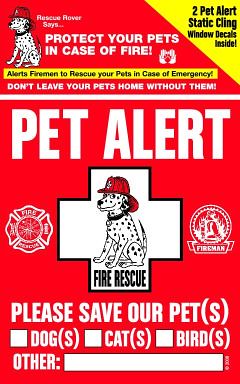
Free Pet Alert Window Decal

Paramount Alarm is offering Free Pet Alert Window Decals.

Free Pet Alert Window Decal


We've had pet alert decals from other companies listed on the All About Labradors blog before and we will continue to post them as we find them, as we believe these are extremely important to have on your home windows for the safety of our beloved Labrador Retrievers.

In case of fire, protect your pets with a Free Pet Alert Window Decal. "Firefighers are familiar with pet alert window clings. Knowing the number of pets in a household helps rescuers locate your pets and provides important information that may be critical to firefighters when rescuing pets."

Technorati Tags:

Continue Reading...

Saturday, February 26, 2011

Reinventing the Pet Tag

The MobiPetTags ID Suite kicks the Pet ID industry into the21th century. Using the Microsoft® Tag app and the unique capabilities MobiPetTags, Pet Parents can have quick access to their pet’s information whenever and wherever it’s necessary.

PRLog (Press Release) – Feb 24, 2011 - Reinventing the pet tag, MobiPetTags has advanced from simple pet tags with a number etched on a piece of metal or thick plastic to a modern, high tech one using all of the capabilities of smart phones and the internet. No longer is a pet’s safety dependent upon unreliable and outdated manual record keeping or the drawbacks inherent in microchiping. Once a suite/package has been purchased, the data entered with MobiPetTags is not deleted even if the customer is no longer in contact with the company. In addition, pet profiles are easily updateable.

MobiPetTagNo longer do cats or dogs have to wear multiple tags to prove they have current shots and licenses. The MobiPetTag Suite of services enables Pet Parents to store multiple phone numbers, updates and emergency contacts. It can store microchip identifying numbers, license numbers—old and new, shot histories, medical records, dietary information, certifications and all critical pet information through one quick access pet tag. Owners can even keep records of breeding, training accomplishments, competition awards and special handling instructions all in one place and also tagged on their companion animal.

The MobiPetTag Company is joining the likes of KOA (Kampgrounds of America), Book(ed) Passage, Sports Illustrated, USA Today, Acura, Dentyne, Crown Royal, Foursquare, 3M, Universal entertainment, and the most popular magazine in South America - Huisqenoot Magazine—all businesses which use tag technology. The MobiPetTag System combines the latest in custom 2D bar coding from Microsoft® Tag and the massive capability of the Internet with the 3 billion plus cell phone and computer users to create the largest integrated "Pet Information Portability" System for pets in the world.

The MobiPetTags Suite will enable anyone with an Internet connected cell phone and or a personal computer (over 3 billion in the world today) to identify a lost or injured animal companion immediately by simply scanning the Tag with a mobile phone and with a single click be able to call the owner and/or their veterinarian.

If a pet is lost, making a MobiPetTag emergency call will activate its PetTagAlert system to notify all shelters, clinics, volunteer pet rescuers, animal emergency hospitals, pounds and rescue organizations within a 5 mile radius of where the animal disappeared. Also, an immediate lost pet notification will go out to the national network of MobiPetTag users and social network media (Twitter, Facebook, etc.) accounts. A Pet Parent will receive a quick Lost Pet Kit via email which includes ready to print posters as well as special instructions on what to do.

If a pet is injured, especially away from home, and is rushed to the nearest vet for medical treatment, the MobiPetTag System provides quick and easy access to the animal’s medical records through PetCollarTags, PetCallingCards and PetKeyTags. Such access could make the difference between life and death for the animal.

MobiPetTag is not a membership based system but is an integrated product based system. It provides its customers with a Personal Pet Information web page with the pet’s key information and picture; a Pet Collar Tag for small and large pets that have the Microsoft® Tag (pTag) on one side and the pet’s name and access information on the other; PetKeyTags for your key ring with the pet's name and a pTag to a personal Pet Information Page on the front and a pTag to MobiPetTag online Contact Page on the other side; and finally, a PetCallingCards for a wallet or purse, with the pet's picture the pTag to access its personal Pet Information Page on the front and several critical Internet addresses for quick access on the back—including access to our Lost Pet Report page – just in case!

In addition, MobiPetTag offers an additional Shot History/Medical Records/Certificates Page to store pictures of the companion animal’s medical records from its veterinarian for quick faxing on the spot when these records are needed. Today, groomers, boarding kennels, veterinarians, transport services, animal shows, etc. all require key information (shot history, medical records, show certificates, etc.) about the animals they serve. With our custom designed MobiPetTags’, all that information is only as far away as a cell phone.

MobiPetTags (http://www.mobipettag.com) is dedicated to utilizing technology, especially mobile phone technology to make the life of companion animals easier and safer and to make it easier for Pet Parents to provide the most secure and happy environment for their four-footed friends.

MobiPetTag’s Smart System is a custom 2D bar code application from Microsoft® Tag that provides quick access to your pet’s critical information anywhere/anytime.

Download a copy of the Reinventing the Pet Tag PDF to save to your computer and/or print out.

Technorati Tags:

Continue Reading...

Thursday, October 14, 2010

Halloween Safety Tips for your Labrador Retriever

Halloween is a wonderful happy time for the kids and family but can be a very stressful holiday for your Labrador Retriever or other dogs in your family.

Learn how to keep your Labrador Retriever or other family dog safe, happy and healthy with the following Halloween dog safety tip videos.

Learn how to keep your dog safe on Halloween with Eric R. Letendre, the Amazing Dog Training Man:


Eric covers costume safety for your dog, candle and Jack O lantern safety, chocolate and candy wrappers and leaving your dog outside on Halloween. We love the wonderful introduction with Friday the Thirteenth music player and Eric dressed as Jason!

Bark Busters has some safety tips to follow this Halloween to keep your dog safe and happy:


Patrick Louge of Bark Busters covers flammables and edibles, costumes, safe areas and trick or treating with your dog.

The Pampered Pooch talk about Halloween Safety & Fun For Your Dog in this radio broadcast:


Christine and Vicki of the The Pampered Pooch will share some safety tips for your pets at Halloween. Discussions also include useful reflective products for your dog while out with you at night, tips on purchasing costumes, The Pampered Pooch of the Week, Halloween party planning and some party planning ideas for a "Hollywood/Movie" themed birthday party for your dog. Listen in for a howling good time!

Technorati Tags:

Continue Reading...

Sunday, June 27, 2010

Recall Alert: United Pet Group Voluntarily Recalls Pro-Pet Adult Daily Vitamin Supplement for Dogs Because of Possible Salmonella Health Risk

RECALL ALERT:

United Pet Group, Cincinnati, Ohio is voluntarily recalling all unexpired lots of its PRO-PET ADULT DAILY VITAMIN Supplement tablets for Dogs due to possible Salmonella contamination. The Food and Drug Administration is aware of this recall.

The product was sold nationally at various retailers. The product comes in 100-count white plastic bottles with a light blue label, and UPC code 26851-01800. These products are being removed from retail stores and consumers should immediately stop feeding these supplements to their pets. The affected products are those with expiration dates on or before "06/13". The expiration date can be found imprinted vertically on the right side of the product label.

Laboratory testing has revealed that one Lot of this vitamin product was contaminated with Salmonella. The company is recalling all unexpired Lots of the product out of an abundance of caution.

Pets with Salmonella infections may be lethargic and have diarrhea or bloody diarrhea, fever, and vomiting. Some pets will have only decreased appetite, fever and abdominal pain. Infected but otherwise healthy pets can be carriers and infect other animals or humans. If your pet has consumed the recalled product and has these symptoms, please contact your veterinarian.

People who handle dry pet food and/or treats can become infected with Salmonella, especially if they have not thoroughly washed their hands after having contact with the chews or any surfaces exposed to these products. Healthy people infected with Salmonella should monitor themselves for some or all of the following symptoms: nausea, vomiting, diarrhea or bloody diarrhea, abdominal cramping and fever. Rarely, Salmonella can result in more serious ailments, including arterial infections, endocarditis, arthritis, muscle pain, eye irritation, and urinary tract symptoms. Consumers exhibiting these signs after having contact with this product should contact their healthcare providers.

Consumers who have purchased the product are urged to contact United Pet Group or the place of purchase for further direction. Consumers may contact United Pet Group at 1-800-645-5154 ext. 3, Monday through Friday, from 8:30 am to 5:00 pm EST.

http://www.fda.gov/Safety/Recalls/ucm216903.htm

Technorati Tags:

Continue Reading...

Tuesday, November 24, 2009

Dog Bites: Thanksgiving Manners

Newsflash for dog people: not everyone loves your dog. Caninestein's Stephanie Colman on how to manage your dog with a houseful of people.

Wait until you see who is licking the turkey!!


Technorati Tags:

Continue Reading...

Blog Archive

dog videos, cat videos, puppy videos, kitten videos, pet videos

Followers

Syndication

  © Blogger templates The Professional Template by Ourblogtemplates.com 2008

Back to TOP